

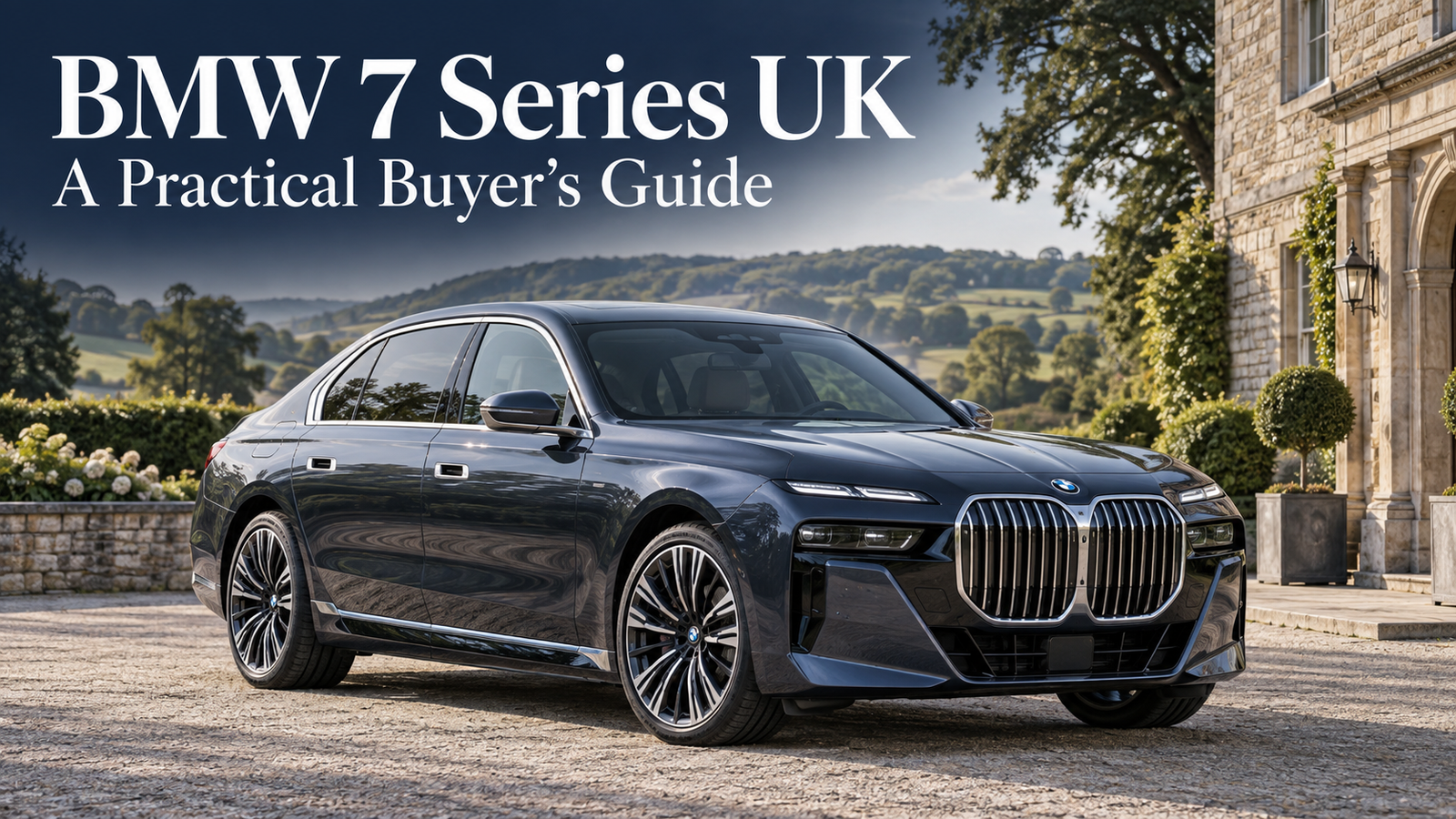
Searching for a BMW 7 Series UK model means looking at one of BMW’s largest and most technology-led luxury saloons. It is designed for buyers who place a high value on long-distance comfort, rear-seat space and a calm driving experience, but the right version depends on how you will use it. A chauffeur-focused car, a motorway commuter and a household’s only vehicle can require very different specifications.
This guide explains the main choices, including the plug-in-hybrid 7 Series and all-electric BMW i7, and highlights the checks worth making before you order or buy used. Specifications, prices and availability can change, so confirm the exact registration or build quotation with a BMW retailer before you commit.

What Is the BMW 7 Series?
The 7 Series is BMW’s flagship saloon. Its long wheelbase and substantial footprint put passenger comfort high on the priority list, while the cabin is built around digital displays, driver-assistance technology and optional rear-seat entertainment. It is a car that rewards a proper test drive: try the seating position, visibility, infotainment controls and rear accommodation rather than relying solely on a brochure or online configurator.
BMW 7 Series or BMW i7?
A plug-in hybrid can suit buyers who have dependable charging at home or work and regularly make shorter journeys, while still wanting the flexibility of a petrol engine for longer trips. However, the environmental and running-cost benefits depend on charging regularly. Check the official WLTP figures for the exact version, then consider your own routes, weather, load and driving style.
The i7 is the fully electric alternative. BMW’s published technical data lists a range of electric versions, with range and charging figures varying by model and specification. A charger that works for your home, your parking arrangement and your usual overnight stop matters more than a headline range figure. For longer journeys, map likely charging stops before purchase and check the vehicle’s navigation, public-charging access and payment arrangements.
Cabin Comfort and Technology
The 7 Series is especially compelling if passengers will spend time in the rear. Compare seat adjustment, climate controls, USB charging, door opening space and luggage capacity with the number of people who normally travel. The optional BMW Theatre Screen is designed for rear-passenger entertainment, but it is not standard equipment, so ask the retailer to show the actual car’s specification.
Up front, take time to use the navigation, camera system, phone connection and driver-assistance controls. Sophisticated technology can be genuinely helpful, but it should feel intuitive for the person who will drive the car every day. Ask which connected services, subscriptions and updates apply to the particular vehicle.

Living With a Large Luxury Saloon
This is a large car, so measure your garage, driveway and usual parking spaces before deciding. Consider narrow car parks, multi-storey ramps and the width of your regular street. Cameras, parking sensors and assistance features can reduce stress, but they do not change the physical dimensions of the car.
Insurance, tyres, servicing, vehicle tax and repair costs should be included in your budget from the beginning. Obtain an insurance quote for the exact registration or proposed specification, particularly for higher-performance versions. If you choose an electric car, also budget for home-charging installation where appropriate and public-charging costs when travelling.
Buying New or Used
A new order allows you to choose colour, wheels and comfort options, but it is easy for a luxury-car specification to become expensive. Prioritise features you will use often: seating, audio, parking support, charging capability and safety equipment may matter more than cosmetic extras. Request a written quotation that separates the vehicle price, options, finance terms, delivery timing and any administration charges.
For a used BMW 7 Series, inspect condition and maintenance history carefully. Check the MOT record, confirm the vehicle identification number matches the V5C, and ask whether outstanding recalls have been completed. A specialist inspection is sensible for a complex premium car. Test every fitted feature, including seats, screens, cameras, air conditioning, keys and charging equipment where applicable.
Questions to Ask Before You Decide
- What is included in the exact UK specification and warranty?
- What are the real charging options at home, work and on regular journeys?
- Which servicing, tyre and maintenance costs are likely during my ownership?
- Does the car fit my parking spaces and suit my normal passengers?
- If using finance, what is the total amount payable and what happens at the end of the agreement?
Final Thoughts
The BMW 7 Series UK range is best approached as a comfort and technology decision, not simply a badge choice. Compare the precise car, the way you drive and the costs you can confidently support. A thorough test drive and a written specification will make the final choice clearer.