

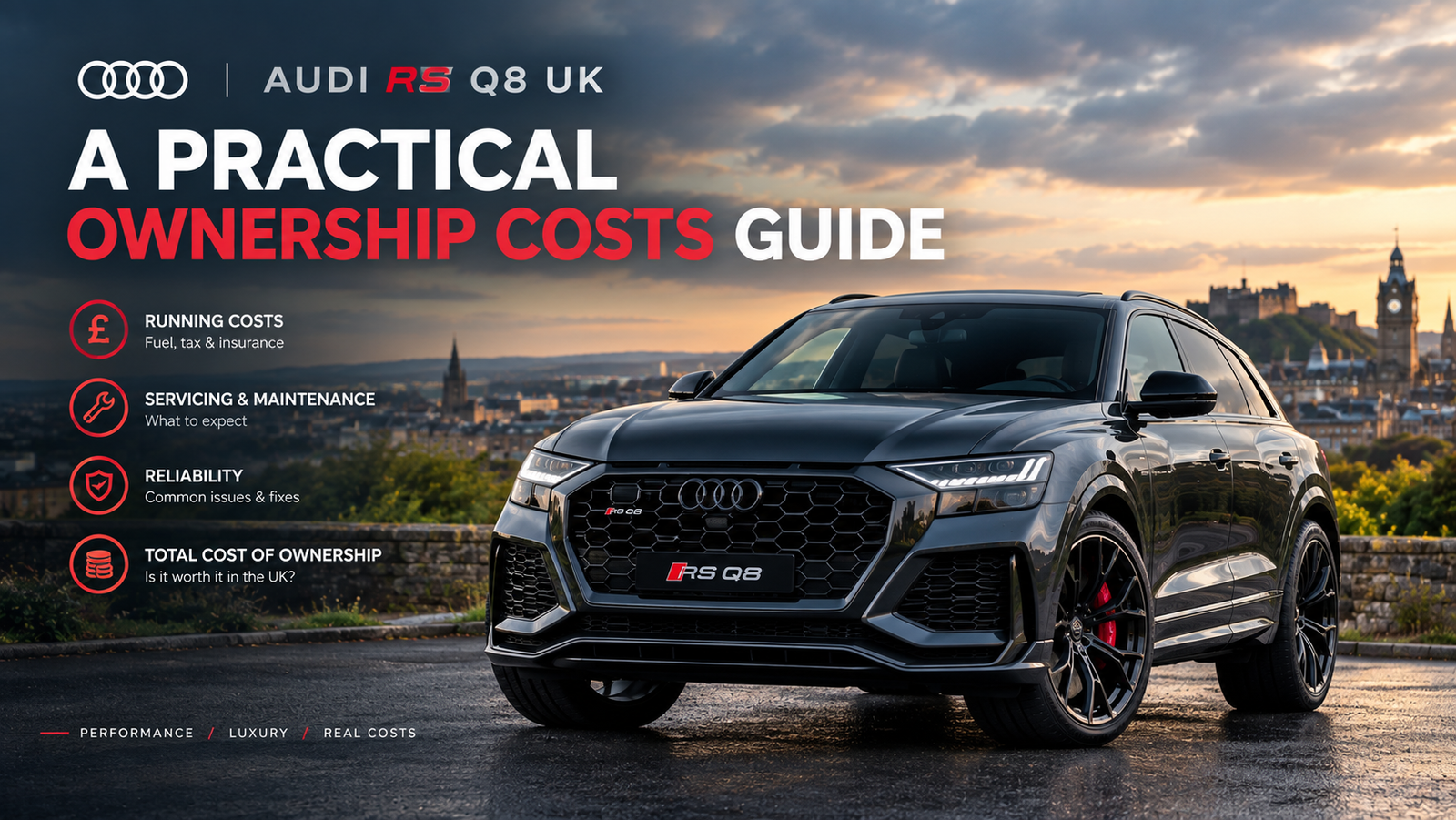
The Audi RS Q8 is one of the most dramatic high-performance SUVs on UK roads, combining a practical five-door body with a powerful petrol engine and serious performance. But an Audi RS Q8 UK purchase should be assessed as a whole ownership commitment, not simply a monthly payment or headline price. Fuel, insurance, tyres, servicing, tax and unexpected repairs can all have a noticeable effect on the annual budget. This guide explains the costs worth checking before buying new, nearly new or used.
_(53986375690).jpg?width=1280)
Fuel is likely to be the largest running cost
The RS Q8 uses a 4.0-litre twin-turbo petrol V8, so fuel costs deserve a realistic calculation. Audi’s published figures for the current RS Q8 SUV show combined consumption of 13.0–13.6 litres per 100 km, depending on version and specification. Real use can vary substantially. Frequent short journeys, brisk driving, winter conditions, traffic and a heavy right foot will normally increase consumption, while gentle motorway cruising may be less demanding.
Instead of relying on a generic annual estimate, multiply your expected mileage by a conservative fuel-consumption assumption and today’s local premium-unleaded price. Then test the budget against a higher fuel price too. This is particularly important if the car will be used for commuting or regular long-distance journeys. A test drive tells you about the experience, but only several tanks of fuel will reveal how it fits your normal routine.
Insurance needs an exact-registration quote
High power, expensive parts and performance-SUV theft risk can make insurance a significant line item. Get quotes before leaving a deposit, using the exact registration where possible. Insurers can price the same model differently according to postcode, mileage, security, driver history, excess and whether the vehicle is kept on a driveway or in a garage. Do not assume a quote for another Q8, or even another RS Q8, will be close enough.
Check the policy wording for approved repairs, replacement parts, windscreen cover, courtesy-car provision and any track-day exclusions. If you add a tracker, security device or cosmetic modification, tell the insurer before it is fitted. Keeping everything declared can help prevent difficulties if a claim is needed.
Tyres, brakes and wear items add up
Large alloy wheels and wide, performance-oriented tyres are part of the RS Q8’s appeal, but they can be expensive to replace. Ask the seller for the tyre sizes, brand, tread depths and fitting dates, then price a complete set from reputable UK suppliers. Look for uneven wear, sidewall damage and kerbing; these can point to alignment or suspension issues as well as creating an immediate expense.
Brakes also deserve close attention. Ask for service records and inspect the discs and pads during a specialist check. A well-maintained example is not automatically cheap to run, but documented servicing and sound consumables reduce the chance that several major bills arrive soon after purchase.

Servicing, warranty and repair planning
Follow the manufacturer service schedule and request an itemised history on used cars. A main-dealer or recognised Audi specialist can explain what is due next and quote for routine work. For a used RS Q8, confirm the remaining manufacturer warranty or the terms of any extended warranty. Read exclusions, claim limits, excesses and servicing conditions carefully; warranty products are not identical.
A professional pre-purchase inspection is sensible for a high-value performance vehicle. It can identify accident repairs, diagnostic faults, worn brakes, suspension concerns and evidence of poor maintenance. Check that both keys, manuals, locking-wheel-nut key and relevant accessories are included. Use the GOV.UK vehicle information service to verify the vehicle’s MOT and tax information, then compare the VIN and history with the seller’s paperwork.
Tax, finance and depreciation
Vehicle Excise Duty rules and expensive-car supplements can change, so check the current rate for the exact registration on GOV.UK rather than relying on an old advert or forum post. If finance is involved, compare the total amount payable, deposit, APR, mileage terms, final payment and early-settlement rules. PCP and lease payments may look manageable while still leaving a larger overall commitment than expected.
Depreciation is also a cost, even though it is not a monthly bill. Specification, mileage, condition, service history, colour and the wider used-car market can all influence resale value. Choose a car you genuinely want to keep, preserve its history file and avoid paying for options solely because you expect every pound to return at sale time.
Questions to ask before purchase
- What are the current tyre, brake and next-service requirements?
- Has the car had accident repairs, modifications or insurance claims?
- Which warranty remains and what does it exclude?
- Can I see the full specification, service record and two keys?
An Audi RS Q8 UK ownership experience can be rewarding when the budget accounts for every predictable cost. Use Audi UK’s official RS Q8 page for current model information, obtain exact insurance and finance figures, and inspect a used example carefully. Planning these expenses in advance is the best way to enjoy the car without unwelcome surprises.