

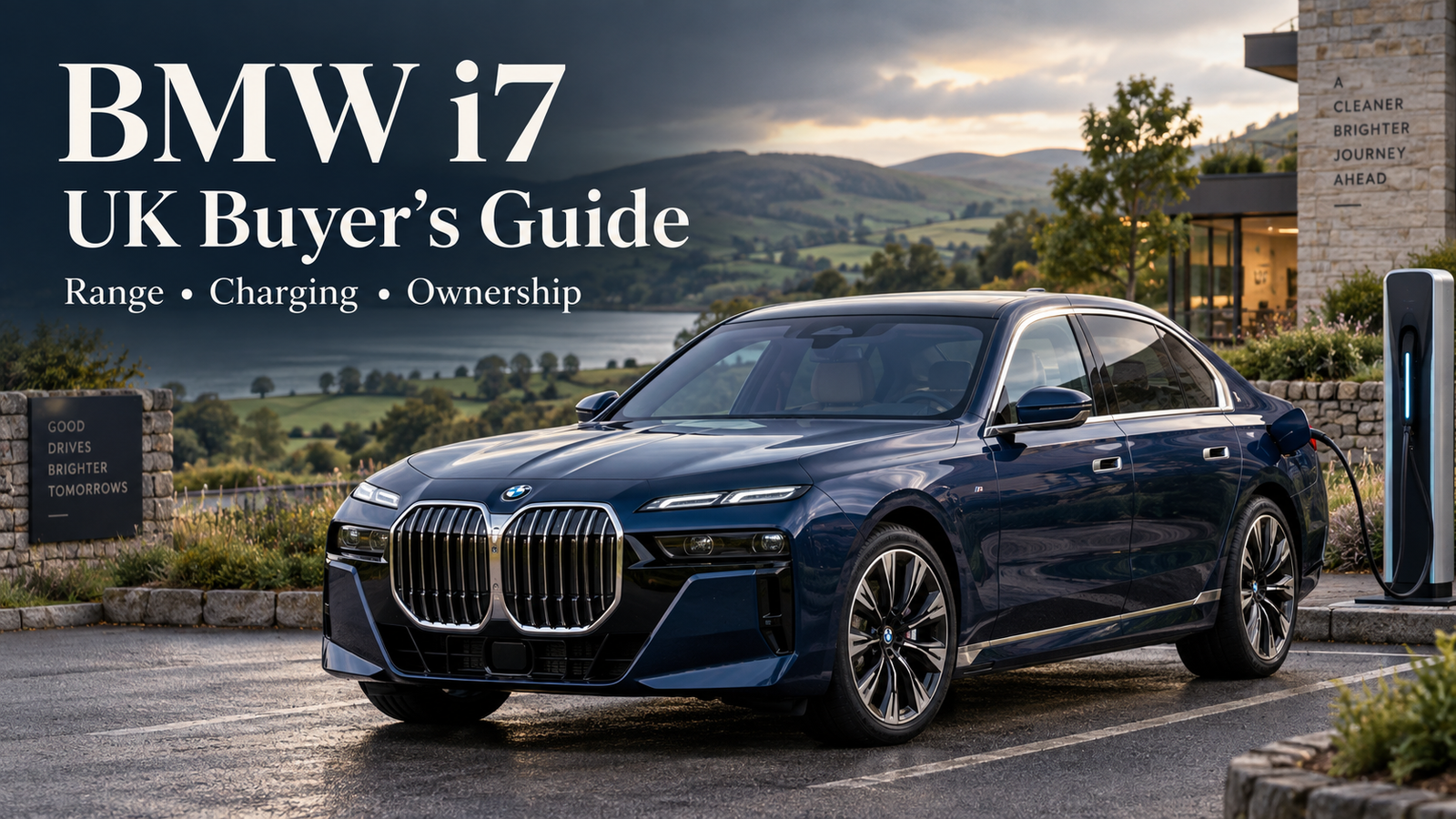
A BMW i7 UK search is about more than choosing an electric luxury saloon with a recognisable badge. This is a long, technology-led flagship intended for quiet motorway travel, chauffeured journeys and buyers who want a full-size car without a combustion engine. The right i7 can be hugely satisfying, but the best choice depends on how and where you drive, charge and park it. Use this buyer’s guide to compare the real-world considerations before committing to a new, pre-registered or Approved Used example.

Start with range and charging, not the headline figure
Range is central to any BMW i7 buyer’s decision. BMW UK’s current technical-data page lists a WLTP range of 401–451 miles for the i7 xDrive50, alongside a 112.5 kWh battery and up to 250 kW DC charging. It also states a 10–80% rapid-charge time of around 28 minutes under the stated conditions. Those are useful comparison figures, but they are not a promise for every journey. Motorway speed, winter temperatures, wheel choice, cabin heating, passenger load and driving style all affect consumption.
When viewing a car, ask which exact model and wheel specification it is, then use that vehicle’s official documentation. For a long-distance routine, plan a realistic charging stop rather than treating the maximum range as a target. A short test drive will not reveal everything, so consider borrowing or hiring an EV for a familiar motorway trip if this will be your first electric car.
Check the dimensions against daily life
The i7 delivers limousine-like rear-seat room because it is physically substantial. BMW lists an overall length of 5,395 mm and a width of 2,173 mm including mirrors, with a 500-litre boot. Measure your garage, driveway, office parking bay and the narrowest section of your regular route. Also check whether public chargers you use leave sufficient space for a large saloon and an open charge-port area. These practical details matter more than a generous showroom floor.
Choose the exact car, not just the model name
BMW i7 specifications, equipment packs and software can differ by model year and individual vehicle. Some cars may have performance-oriented hardware; others focus on comfort. Rear-seat entertainment, premium audio, driver-assistance features, seating options, wheel sizes and interior trims can all change the value proposition. Treat a dealer listing as a starting point: request the registration or VIN, a full equipment list and written confirmation of anything important to your purchase.
For an Approved Used or nearly-new BMW i7, inspect the condition of the large wheels and tyres carefully, check for kerb damage and make sure all keys, charge cables and accessories are present. Sit in both rows, test the infotainment and climate controls, and confirm that every seat adjustment and camera works. A pre-purchase inspection can be worthwhile for a high-value vehicle.

Have a charging plan before you buy
Home charging is usually the simplest and most predictable way to own an EV. If off-street parking is available, obtain a quote for a suitably specified home charger and ask your electricity supplier about overnight tariffs. If you rely on public charging, map reliable rapid chargers around your home, workplace and regular long-distance routes. Check access arrangements, payment apps and whether the cable length is practical for the i7’s charging-port position.
Apartment residents and on-street parkers should be especially realistic. Local charging infrastructure may improve, but a purchase should work with the options you can use today. Keep a charging card or app backup for long trips, and build in time for busy locations during holiday travel.
Budget for the whole ownership picture
The purchase price or monthly finance figure is only one line of the budget. Obtain insurance quotes for the exact registration before paying a deposit, and compare electricity costs at home and on public networks. Factor in tyres, servicing, vehicle excise duty, parking and any finance charges. If you are considering PCP, lease or hire purchase, compare the total amount payable, mileage allowance, end-of-contract rules and early-settlement terms rather than concentrating solely on the monthly payment.
Questions to ask the seller
- Which model year, battery warranty terms and service history apply to this car?
- What is included: both keys, charging cables, wheels, accessories and software subscriptions?
- Has the car had accident repairs, replacement tyres or wheel refurbishment?
- Can I see the official specification and take a sufficiently long test drive?
The BMW i7 UK can be a compelling choice for buyers who value refinement, space and electric long-distance capability. Take time to verify the exact specification, make charging practical and price the full ownership costs. For the latest model-specific figures, check BMW UK’s official i7 technical data; for a used-car history check, use the DVLA vehicle information service. That careful groundwork will make it much easier to select the i7 that suits your routine.