

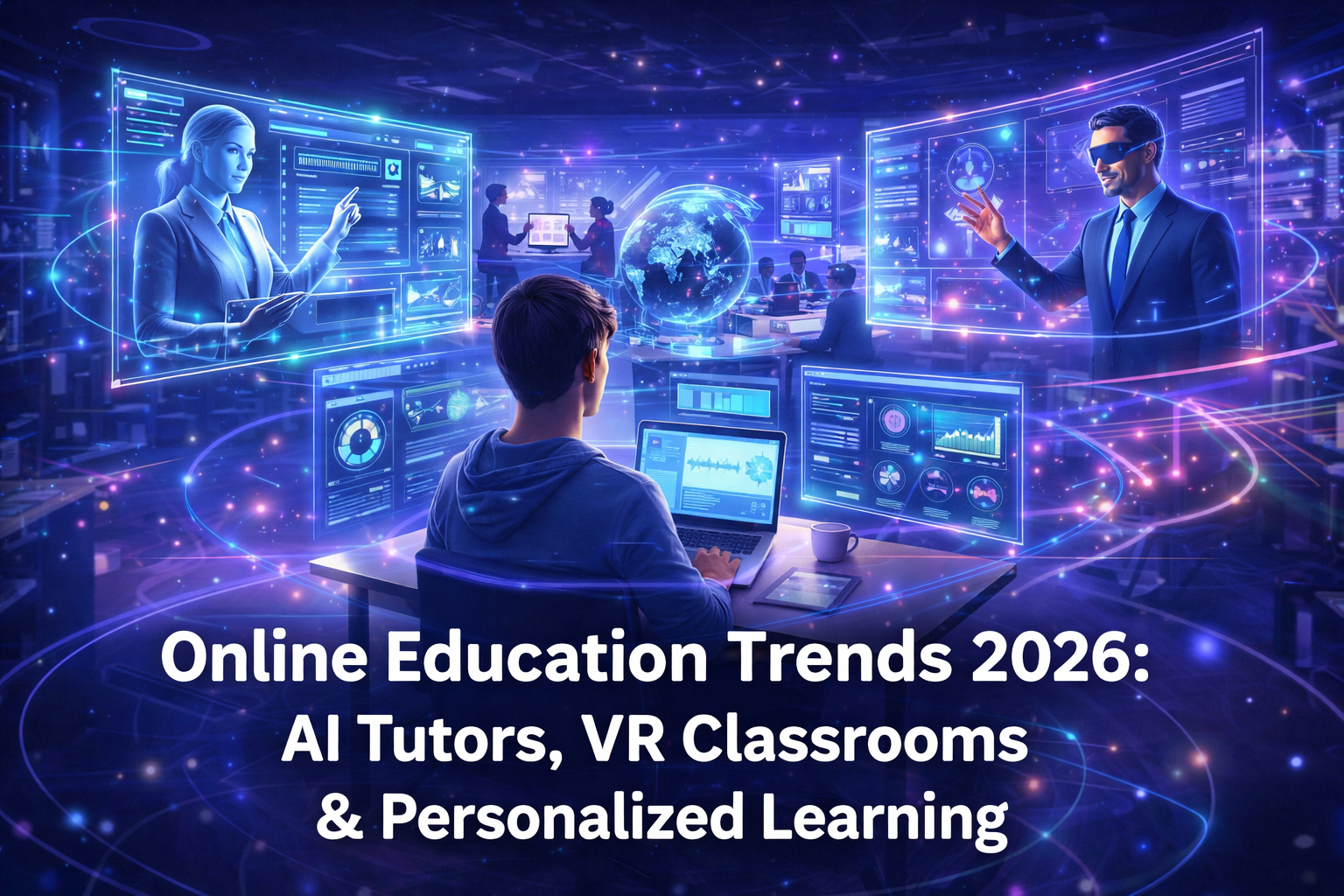
The global education system is evolving faster than ever before. As we approach 2026, online education is no longer just an alternative to traditional learning — it has become a powerful ecosystem driven by artificial intelligence, immersive technologies, and personalized digital experiences. From AI-powered tutors to virtual reality classrooms, the future of learning is becoming more interactive, accessible, and student-centered.
In this article, we explore the most important online education trends shaping the future of learning and how they are transforming academic experiences worldwide.
The Rise of AI Tutors in Digital Learning
Artificial intelligence is playing a transformative role in modern education. AI tutors can provide real-time feedback, customized learning paths, and adaptive study plans based on individual student performance.
Unlike traditional teaching methods, AI-driven platforms analyze learning patterns and identify areas where students need additional support. This data-driven approach helps learners progress at their own pace while improving retention and engagement.
Educational institutions and edtech companies are increasingly investing in AI tutoring systems to enhance academic outcomes and reduce learning gaps.
SEO Keywords: AI tutors in education, artificial intelligence learning tools, AI-powered online learning

Virtual Reality Classrooms and Immersive Learning
Virtual reality (VR) is redefining how students experience education. Instead of passively consuming information, learners can now explore immersive environments such as historical simulations, scientific laboratories, and virtual campuses.
VR classrooms enhance engagement by making complex subjects more interactive and visually intuitive. For example, medical students can practice procedures in simulated environments, while engineering students can visualize 3D designs in real time.
As VR hardware becomes more affordable, immersive learning is expected to become a mainstream component of digital education.
SEO Keywords: VR classrooms future, immersive learning technology, virtual reality education
Personalized Learning as the New Standard
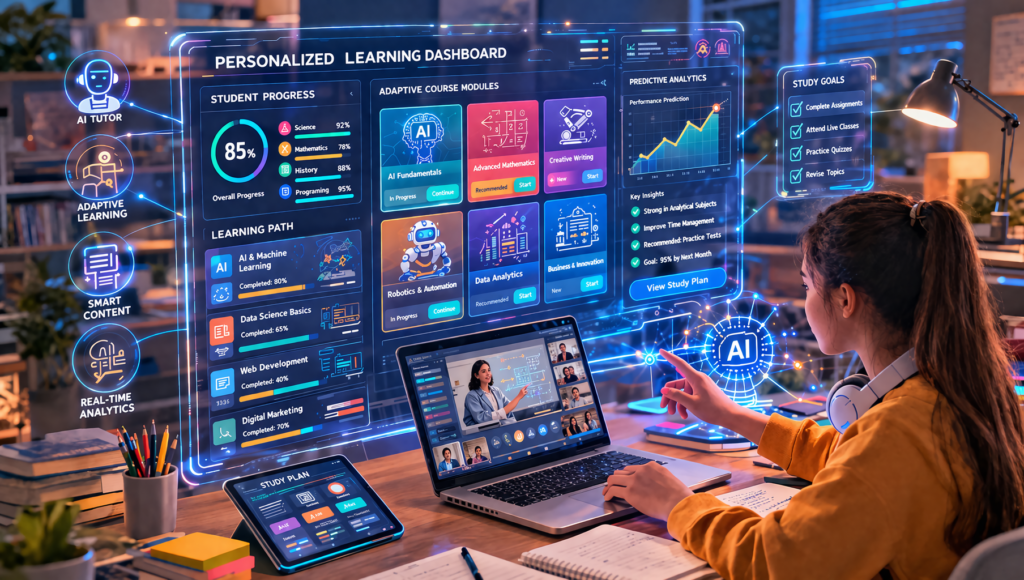
Personalization is becoming the cornerstone of online education. Adaptive learning platforms tailor content based on student preferences, performance, and learning styles.
This individualized approach helps students stay motivated and improves academic success rates. Personalized dashboards, predictive analytics, and smart recommendations enable learners to track progress and optimize study strategies.
Educational institutions are increasingly integrating personalized learning systems to deliver more effective and inclusive education.
SEO Keywords: personalized learning trends, adaptive education platforms, student-centered learning
Expanding Global Access Through Online Education
Online education is breaking geographical barriers and democratizing access to knowledge. Students from remote and underserved regions can now access high-quality educational resources and global academic programs.
Massive open online courses (MOOCs), digital certifications, and remote degree programs are enabling learners to build competitive skills regardless of location.
This global accessibility is fostering collaboration, cultural exchange, and knowledge-sharing on an unprecedented scale.
SEO Keywords: global online education growth, digital learning accessibility, remote education opportunities
Skills for the Future Workforce
As industries evolve, online education is adapting to prepare students for future job markets. Courses focusing on digital literacy, data analytics, artificial intelligence, and creative problem-solving are becoming increasingly popular.
Employers value candidates who demonstrate adaptability, continuous learning, and technological proficiency. By embracing innovative online education trends, students can develop the skills necessary to thrive in rapidly changing professional environments.
SEO Keywords: future skills education, online learning career development, digital workforce training
The Role of Hybrid Learning Models
Hybrid education models that combine online and in-person instruction are gaining popularity. These models offer flexibility while maintaining opportunities for social interaction and hands-on experiences.
Universities and training institutions are redesigning curricula to integrate digital tools with traditional teaching methods. This blended approach ensures that students benefit from both technological innovation and structured academic environments.
Conclusion
Online education trends in 2026 highlight the transformative power of AI tutors, VR classrooms, and personalized learning systems. These innovations are reshaping how students access knowledge, engage with educational content, and prepare for future careers.
As technology continues to advance, digital education will become more immersive, inclusive, and effective. Institutions and learners who embrace these trends will be better positioned to succeed in the evolving global education landscape.
You are absolutely right, even online education market place offering very attractive and effective courses which can be helpful to built a strong carrier. By the way I prefer Udemy
does online education still value for money!