

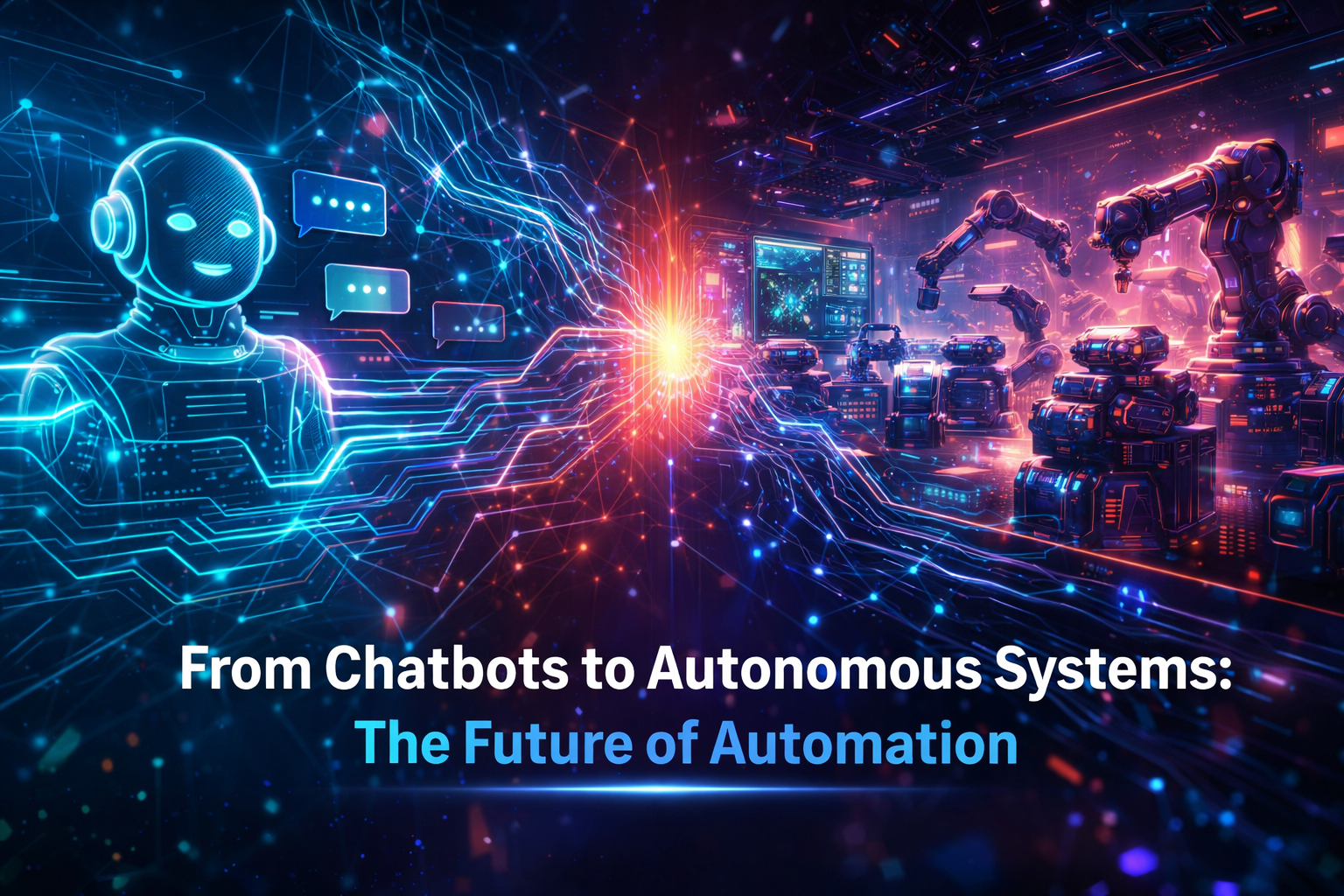
Automation has evolved dramatically over the past decade. What began as simple rule-based chatbots handling customer queries has now transformed into highly intelligent autonomous systems capable of making decisions, learning from data, and executing complex tasks without human intervention. This rapid evolution is not only redefining how businesses operate but also reshaping the global workforce, economic structures, and technological innovation.
As artificial intelligence continues to advance, the shift from conversational automation to fully autonomous systems marks one of the most significant transformations in modern digital history. In this article, we explore how automation has evolved, what autonomous systems mean for the future, and how businesses can strategically prepare for this technological shift.
The Early Days of Automation: Chatbots and Rule-Based Systems
Automation initially focused on simplifying repetitive tasks. Early chatbots were designed to respond to frequently asked questions using predefined scripts and decision trees. While these systems improved efficiency and reduced customer service workloads, they lacked contextual understanding and adaptability.
Over time, machine learning and natural language processing enabled chatbots to become more conversational and intelligent. Modern AI chatbots can understand intent, analyze sentiment, and deliver personalized responses. However, despite these improvements, chatbots represent only the beginning of automation’s potential.
Today’s technological landscape is moving toward systems that not only communicate but also act autonomously — making strategic decisions and optimizing processes without constant human input.
SEO Keywords: chatbot evolution, AI customer service automation, intelligent chatbots

The Rise of Intelligent Automation
Intelligent automation combines artificial intelligence, robotics, and data analytics to create systems that continuously learn and improve. Unlike traditional automation, which follows fixed instructions, intelligent automation adapts to changing conditions and delivers predictive insights.
Businesses across industries are adopting intelligent automation to streamline operations, reduce costs, and enhance customer experiences. In finance, AI systems automate fraud detection and risk analysis. In healthcare, intelligent automation assists with diagnostics and treatment planning. In manufacturing, smart robotics optimize production processes.
This transition represents a move from task automation to decision automation — a shift that significantly increases operational agility and innovation potential.
SEO Keywords: intelligent automation trends, AI-driven efficiency, predictive automation
Autonomous Systems: The Next Frontier
Autonomous systems represent the future of automation. These systems are designed to operate independently, making real-time decisions based on environmental data, historical patterns, and predictive models.
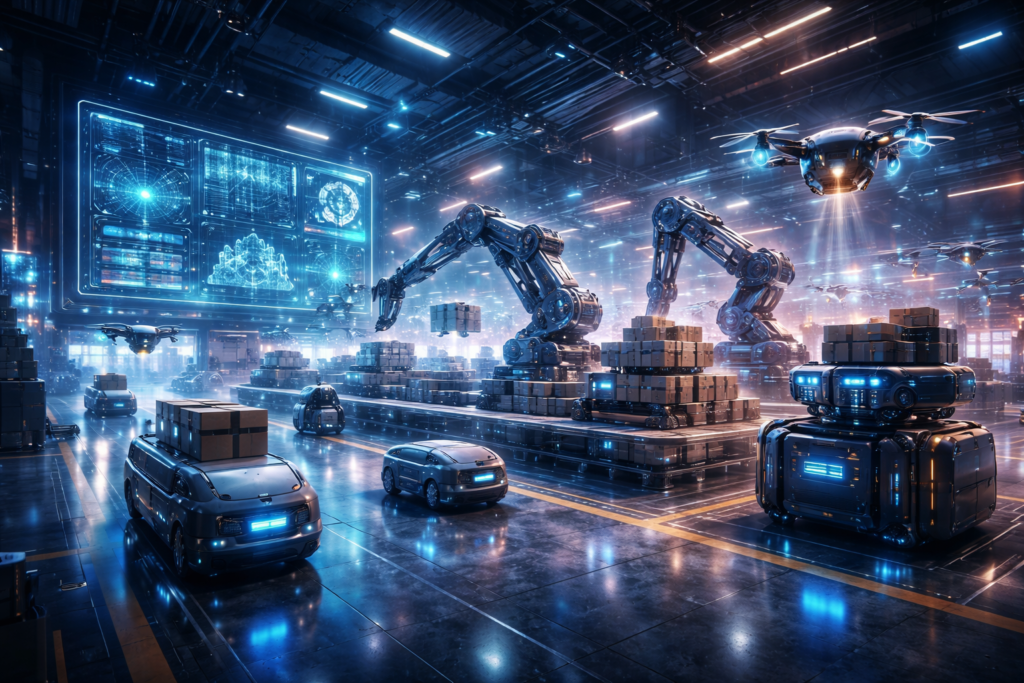
Examples include autonomous vehicles, AI-driven supply chain networks, smart cities, and self-optimizing industrial systems. These technologies reduce human intervention while improving precision, scalability, and resilience.
For businesses, autonomous systems unlock new levels of productivity and strategic capability. They enable organizations to respond instantly to market changes, optimize resource allocation, and maintain competitive advantage in rapidly evolving industries.
However, this shift also introduces challenges such as ethical governance, cybersecurity risks, and workforce adaptation.
SEO Keywords: autonomous systems future, AI autonomy technology, next-gen automation
Impact on the Workforce and Business Strategy
The evolution from chatbots to autonomous systems is transforming the nature of work. Routine tasks are increasingly automated, while new roles are emerging in AI development, data science, and human-AI collaboration.
Organizations must focus on reskilling initiatives to prepare employees for this transition. Instead of replacing human workers, autonomous systems will augment human capabilities, enabling professionals to focus on creative, strategic, and value-driven tasks.
Businesses that proactively align their workforce strategies with automation trends will gain long-term resilience and innovation capacity.
SEO Keywords: automation workforce impact, future of jobs AI, human-AI collaboration
Ethical and Governance Considerations
As automation becomes more autonomous, ethical considerations become increasingly important. Issues such as algorithmic transparency, accountability, and data privacy must be addressed to ensure responsible deployment.
Governments and organizations worldwide are developing frameworks to regulate autonomous technologies while fostering innovation. Building trust in automation systems will be critical for public acceptance and sustainable technological progress.
Responsible AI governance is no longer optional — it is essential for long-term success in an automation-driven economy.
SEO Keywords: ethical automation, AI governance framework, responsible autonomous systems
The Road Ahead: Automation as a Strategic Advantage
The future of automation lies in the seamless integration of conversational AI, intelligent systems, and fully autonomous technologies. Businesses that adopt a strategic approach to automation will unlock new growth opportunities, enhance operational efficiency, and deliver superior customer experiences.
Automation will continue to evolve beyond efficiency gains toward innovation-driven transformation. Organizations must invest in research, infrastructure, and talent development to remain competitive in the age of intelligent autonomy.
Ultimately, the journey from chatbots to autonomous systems represents not just technological progress but a paradigm shift in how humans and machines collaborate to shape the future.
Conclusion
Automation has come a long way from simple chatbot interactions to sophisticated autonomous systems capable of transforming industries. This evolution highlights the growing importance of AI-driven decision-making, predictive intelligence, and strategic automation adoption.
As businesses navigate this transformation, those who embrace automation responsibly and proactively will lead the next wave of global innovation. The future belongs to organizations that understand automation not merely as a tool but as a fundamental driver of progress.