

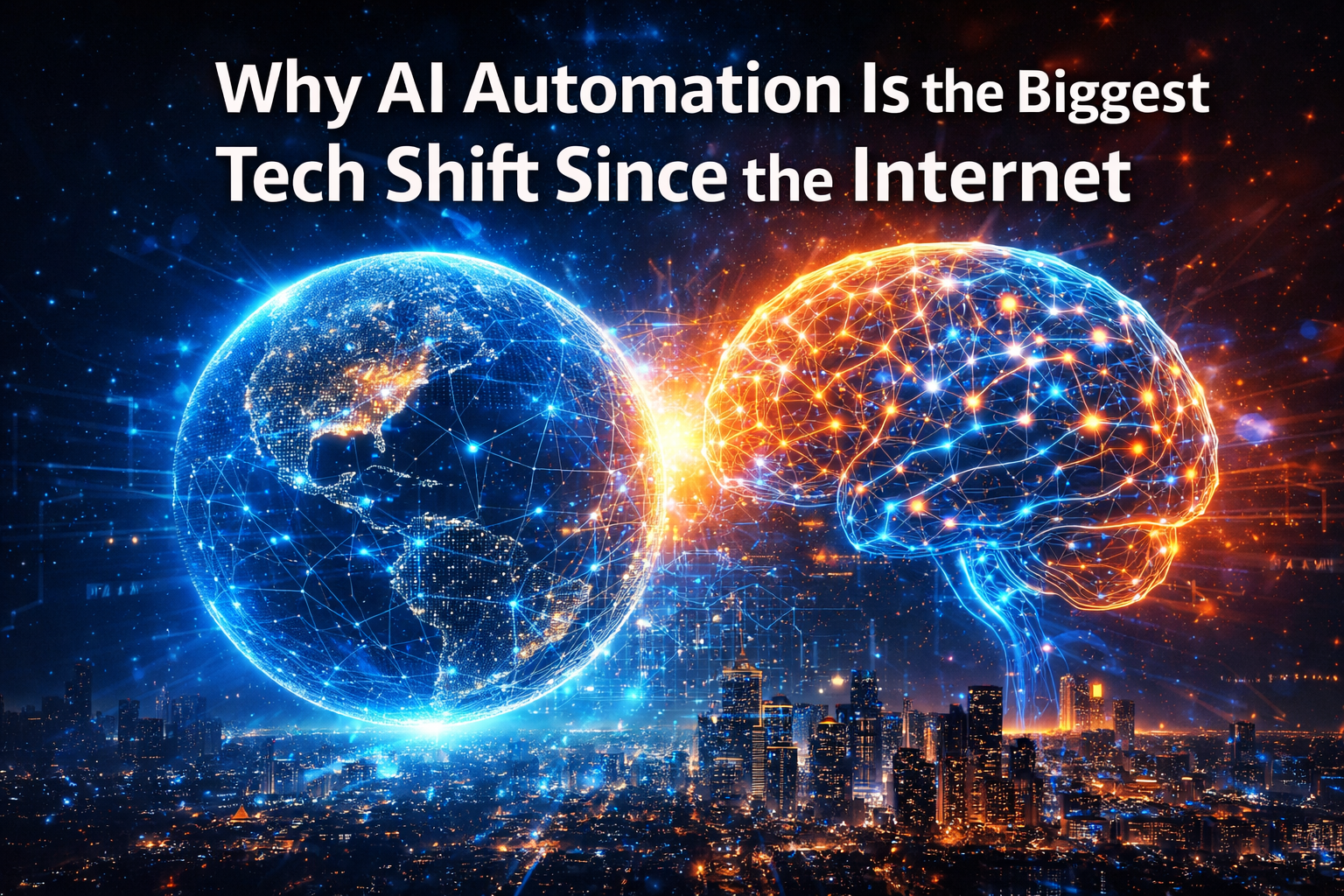
The digital world has witnessed several revolutionary transformations, but few compare to the disruptive power of Artificial Intelligence (AI) automation. Just as the internet reshaped communication, commerce, and access to information, AI automation is redefining how businesses operate, innovate, and compete in the modern economy.
From intelligent customer support systems to autonomous decision-making platforms, AI automation is not just an incremental upgrade — it represents a fundamental shift in how technology integrates with human productivity. In this article, we explore why AI automation is widely considered the biggest technological shift since the rise of the internet and what it means for the future of industries worldwide.
The Evolution From Connectivity to Intelligence
The internet connected the world. AI automation is making that connected world intelligent. While the internet enabled information exchange at unprecedented speed, AI enables machines to analyze, learn, and act on that information autonomously.
Businesses today no longer rely solely on digital connectivity; they rely on data-driven intelligence. AI systems process massive datasets in real time, uncovering insights that were previously impossible to detect. This shift marks the transition from “digital transformation” to “intelligent transformation.”
Organizations leveraging AI automation gain competitive advantages through faster decision-making, improved operational efficiency, and predictive analytics capabilities.
SEO Keywords: AI transformation, AI automation revolution, digital intelligence era
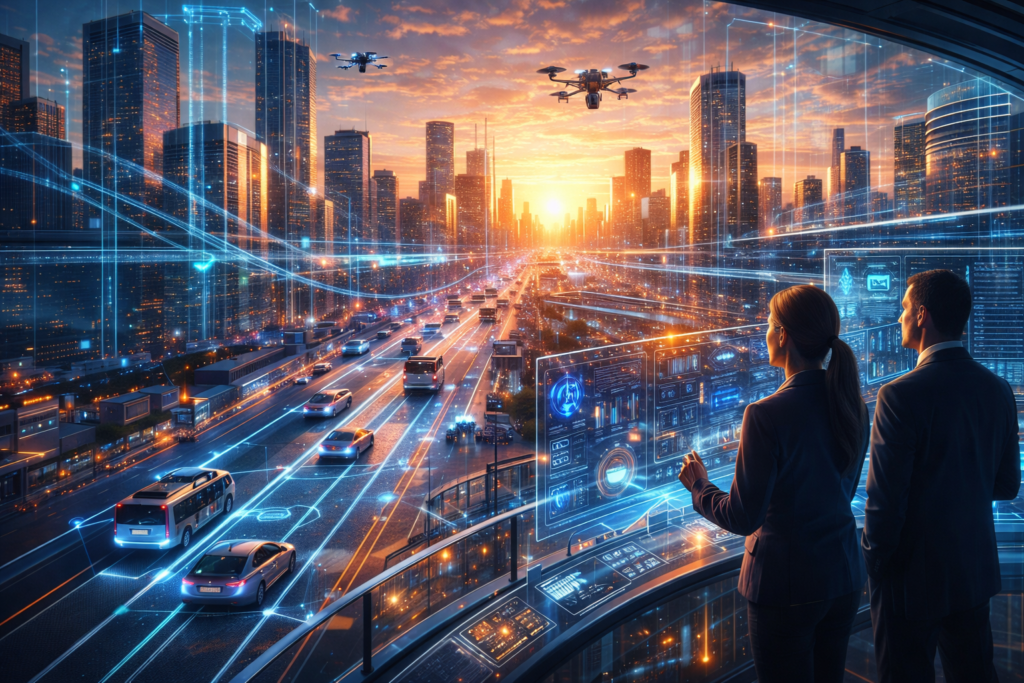
AI Automation Is Redefining Productivity
AI automation is revolutionizing productivity across industries. Unlike traditional software systems that follow predefined instructions, AI solutions learn from patterns and continuously optimize performance.
In manufacturing, AI-driven robotics improve production efficiency. In finance, intelligent algorithms detect fraud and automate complex risk assessments. In healthcare, AI assists in diagnostics and personalized treatment planning.
The result is a significant boost in operational speed and accuracy, allowing organizations to scale faster than ever before. This productivity revolution is comparable to how the internet enabled global collaboration and digital workflows.
SEO Keywords: AI productivity impact, automation efficiency, intelligent business systems
The Rise of Autonomous Decision-Making
One of the most transformative aspects of AI automation is its ability to make autonomous decisions. Advanced machine learning models analyze trends, forecast outcomes, and execute actions with minimal human intervention.
For example, AI-powered supply chain systems can predict demand fluctuations and adjust logistics strategies automatically. Marketing platforms use AI to optimize campaigns in real time based on user behavior data.
This shift reduces reliance on manual decision-making and enhances strategic agility, allowing companies to respond to market changes with unprecedented speed.
SEO Keywords: autonomous AI systems, AI decision making, predictive automation

AI Automation Is Transforming the Workforce
Just as the internet reshaped job roles and created new digital professions, AI automation is redefining the future of work. While some routine tasks are being automated, new opportunities are emerging in areas such as AI development, data science, and human-AI collaboration.
Organizations must focus on workforce reskilling to ensure employees remain relevant in an AI-driven economy. Hybrid work models combining human creativity with machine intelligence will dominate future business environments.
This transformation represents not job elimination but job evolution — a shift toward higher-value, strategic roles.
SEO Keywords: AI workforce transformation, future of jobs AI, human-AI collaboration
Industry Disruption at an Unprecedented Scale
AI automation is disrupting industries at a speed that rivals the internet revolution. From retail and logistics to education and entertainment, AI technologies are reshaping customer experiences and operational models.
Companies adopting AI early gain first-mover advantages, while those delaying adoption risk falling behind. This technological divide is creating a new competitive landscape where innovation speed determines market leadership.
The global AI market continues to grow rapidly, reinforcing its role as a foundational pillar of future economic growth.
SEO Keywords: AI industry disruption, AI market growth, automation innovation
Ethical and Strategic Considerations
While AI automation offers immense potential, it also raises ethical and strategic challenges. Issues such as data privacy, algorithmic bias, and transparency must be addressed to ensure responsible adoption.
Organizations must implement governance frameworks to balance innovation with accountability. Building trust in AI systems is essential for long-term sustainability and public acceptance.
The internet era taught businesses the importance of cybersecurity and digital ethics. Similarly, the AI era demands a proactive approach to ethical technology management.
SEO Keywords: ethical AI adoption, AI governance, responsible automation
The Future: From Automation to Augmentation
The next phase of AI evolution will focus on augmentation rather than automation alone. Instead of replacing human capabilities, AI will enhance creativity, innovation, and strategic thinking.
Collaborative intelligence — where humans and AI systems work seamlessly together — will define the next generation of technological progress. Companies that embrace this vision will unlock new levels of innovation and value creation.
Conclusion
AI automation represents the most significant technological shift since the emergence of the internet. By transforming productivity, decision-making, workforce dynamics, and industry structures, AI is redefining the foundations of modern business.
Organizations that strategically adopt AI automation while addressing its ethical and operational challenges will shape the future digital economy. As history has shown with the internet revolution, those who adapt early will lead the next wave of global innovation.