

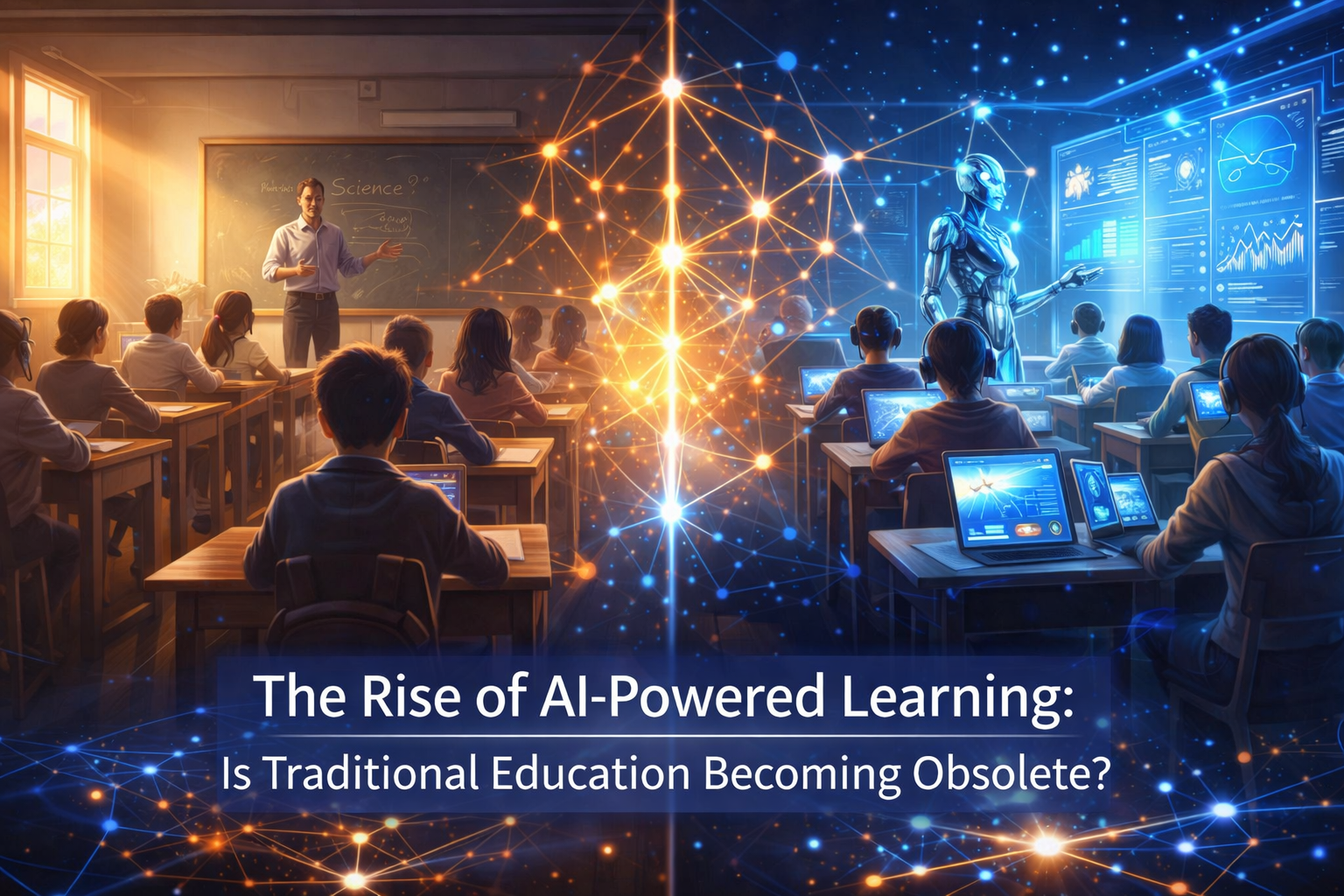
Artificial Intelligence (AI) is rapidly transforming the global education landscape. From personalized learning platforms to intelligent tutoring systems, AI-powered learning is redefining how students acquire knowledge and how educators deliver instruction. As digital innovation accelerates, a critical question emerges: Is traditional education becoming obsolete?
This article explores the rise of AI in education, its impact on conventional learning models, and whether the future of education lies in technology-driven ecosystems.
Understanding AI-Powered Learning
AI-powered learning refers to the integration of artificial intelligence technologies into educational systems to enhance teaching, learning, and assessment processes. AI tools can analyze student performance, customize content delivery, automate grading, and provide real-time feedback.
Unlike traditional classroom settings, AI-driven education enables adaptive learning experiences tailored to individual needs, improving knowledge retention and engagement.
The Evolution of Education in the Digital Era
Education has evolved significantly over the past two decades. Online courses, virtual classrooms, and digital resources have already transformed learning accessibility. AI is now accelerating this transformation by introducing intelligent automation and predictive analytics.
Key drivers of AI-powered education include:
- Increasing demand for flexible learning models
- Rapid growth of remote and hybrid education
- Need for personalized skill development
- Global digital transformation initiatives
As a result, traditional education systems are being challenged to adapt to new technological realities.
Personalized Learning: A Major Advantage of AI
One of the most significant benefits of AI in education is personalization. AI algorithms analyze learning patterns, strengths, and weaknesses to create customized learning pathways.
Students can learn at their own pace, receive targeted recommendations, and access interactive content designed for their specific learning styles. This level of personalization is difficult to achieve in conventional classroom environments.

Automation in Teaching and Administrative Tasks
AI is not only transforming student learning but also improving operational efficiency in educational institutions. Automated grading systems, intelligent content management tools, and virtual teaching assistants reduce administrative workloads for educators.
This allows teachers to focus more on mentoring, creativity, and critical thinking development rather than repetitive tasks.
Accessibility and Global Learning Opportunities
AI-powered platforms are making education more accessible than ever. Students in remote or underserved regions can access high-quality educational resources through digital learning systems.
Language translation tools, speech recognition, and adaptive interfaces enable inclusive learning experiences for diverse populations.
However, digital inequality remains a challenge that must be addressed to ensure equitable access to AI-driven education.
Limitations of Traditional Education Models
Traditional education systems often rely on standardized curricula, fixed schedules, and one-size-fits-all teaching methods. While these approaches have been effective historically, they may not fully meet the demands of modern learners.
Rigid educational structures can limit creativity, innovation, and real-world skill development. AI-powered learning, on the other hand, emphasizes flexibility and continuous skill adaptation.
The Human Element in Education
Despite the advantages of AI, education is not solely about knowledge transfer. Emotional intelligence, mentorship, social interaction, and ethical development remain essential aspects of learning.
Teachers play a crucial role in shaping students’ values, motivation, and interpersonal skills. AI cannot fully replicate the human connection that defines effective education.
The Future: Collaboration Between AI and Traditional Education
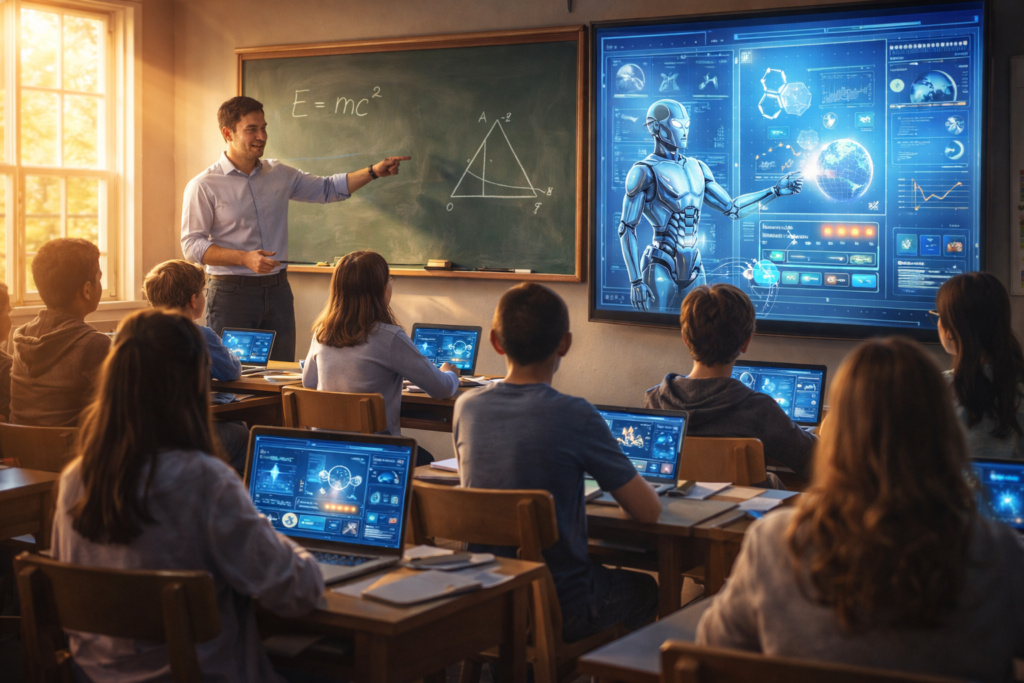
Rather than replacing traditional education, AI is likely to augment existing educational systems. Hybrid learning models that integrate AI technologies with human instruction can provide the best of both worlds.
Future education trends may include:
- AI-driven curriculum design
- Immersive virtual reality learning environments
- Lifelong skill-based education models
- Intelligent career guidance systems
Educational institutions that embrace technological innovation while preserving human-centered learning approaches will be better positioned for long-term success.
Ethical Considerations and Challenges
The integration of AI into education raises important ethical questions regarding data privacy, algorithmic bias, and over-reliance on technology.
Ensuring transparency, responsible AI governance, and digital literacy will be essential to build trust in AI-powered learning systems.
Policymakers, educators, and technology developers must collaborate to create inclusive and ethical educational frameworks.
Conclusion: Is Traditional Education Becoming Obsolete?
AI-powered learning is undeniably transforming education, but it is unlikely to make traditional education obsolete. Instead, it is reshaping how education is delivered and experienced.
The future of learning lies in synergy between technological innovation and human expertise. By leveraging AI’s capabilities while preserving the social and emotional dimensions of education, societies can build more effective and inclusive learning ecosystems.
As AI continues to evolve, adapting educational strategies will be crucial to prepare future generations for a rapidly changing world.