
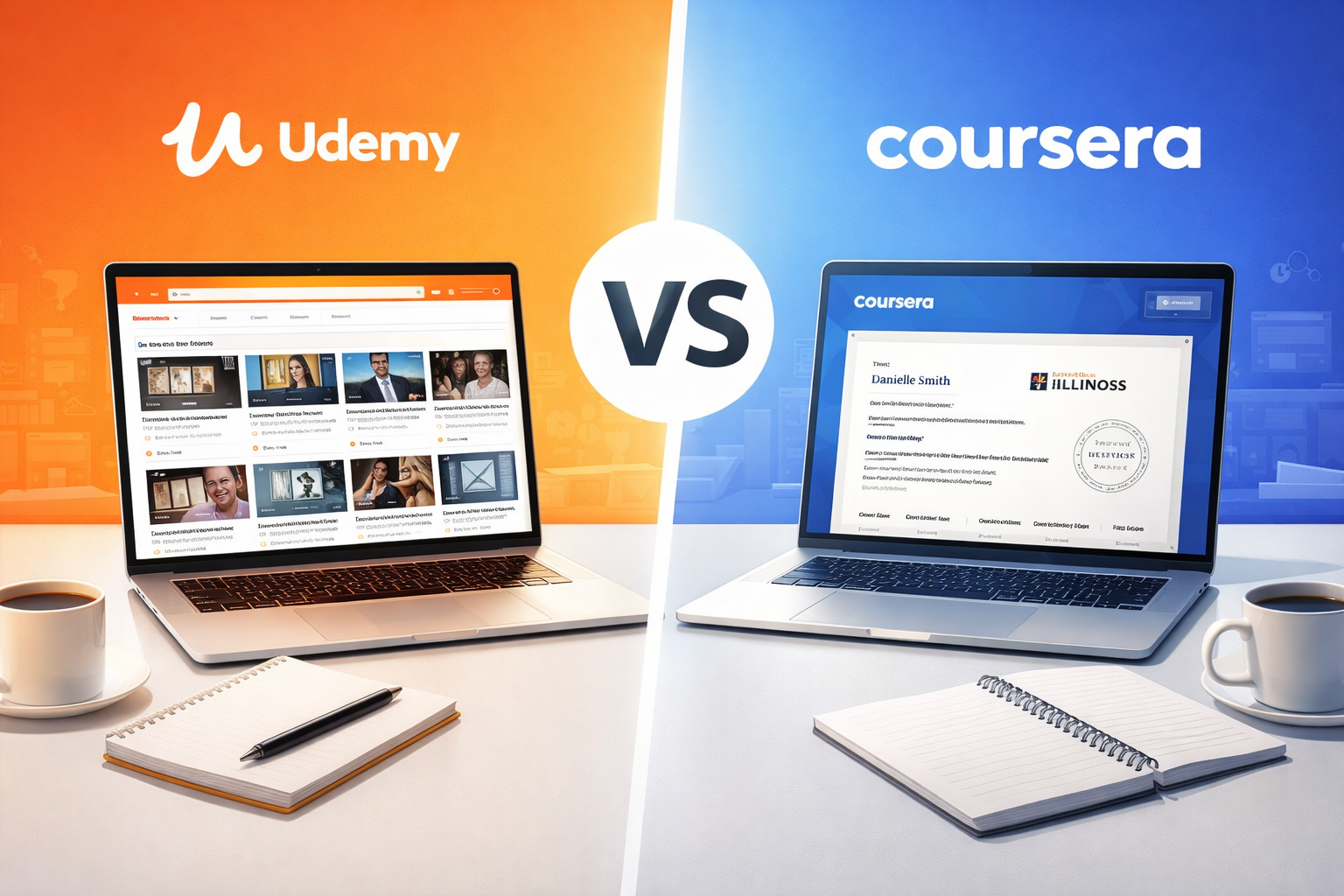
Online education has exploded in the last decade. Millions of learners are now upgrading their skills from home using platforms like Udemy and Coursera.
But if you’re trying to decide between Udemy and Coursera, the question naturally comes up: Which platform is actually better?
The truth is not as simple as saying one is better than the other. Each platform serves different types of learners and different goals. Some people want fast practical skills, while others want structured academic learning with certificates from universities.
In this guide, we’ll break down the real differences between Udemy and Coursera, including pricing, course quality, certifications, and career value.
What Is Udemy?


4
Udemy is a course marketplace where individual instructors can create and sell their own courses.
It hosts over 200,000 courses covering topics like:
- Programming and software development
- Digital marketing
- Personal finance
- Graphic design
- AI and data science
- Photography and creative skills
The biggest advantage of Udemy is practical skill-based learning. Many courses are designed to help you learn something specific quickly.
Key Features of Udemy
1. One-time payment
Most courses are purchased once and you get lifetime access.
2. Massive course variety
Because anyone can create courses, the platform contains an enormous range of topics.
3. Frequent discounts
Udemy courses often drop from $100+ to $10–$20 during sales.
4. Self-paced learning
You can start and finish whenever you want.
Downsides of Udemy
- Course quality varies because anyone can publish courses
- Certificates are not always recognized by employers
- Less structured learning paths
In short, Udemy is best for quick skill acquisition rather than formal education.
What Is Coursera?

4
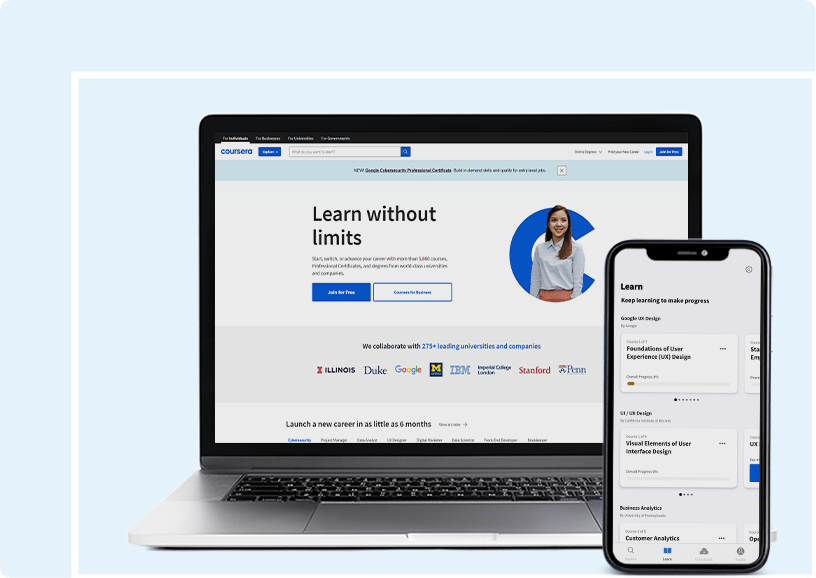
Coursera works very differently.
Instead of individual instructors, most courses come from top universities and companies, including:
- Stanford University
- IBM
- University of Michigan
Coursera focuses on structured academic learning with real credentials.
Key Features of Coursera
1. University-level courses
Many courses are taught by real professors and industry experts.
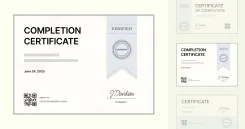
2. Recognized certificates
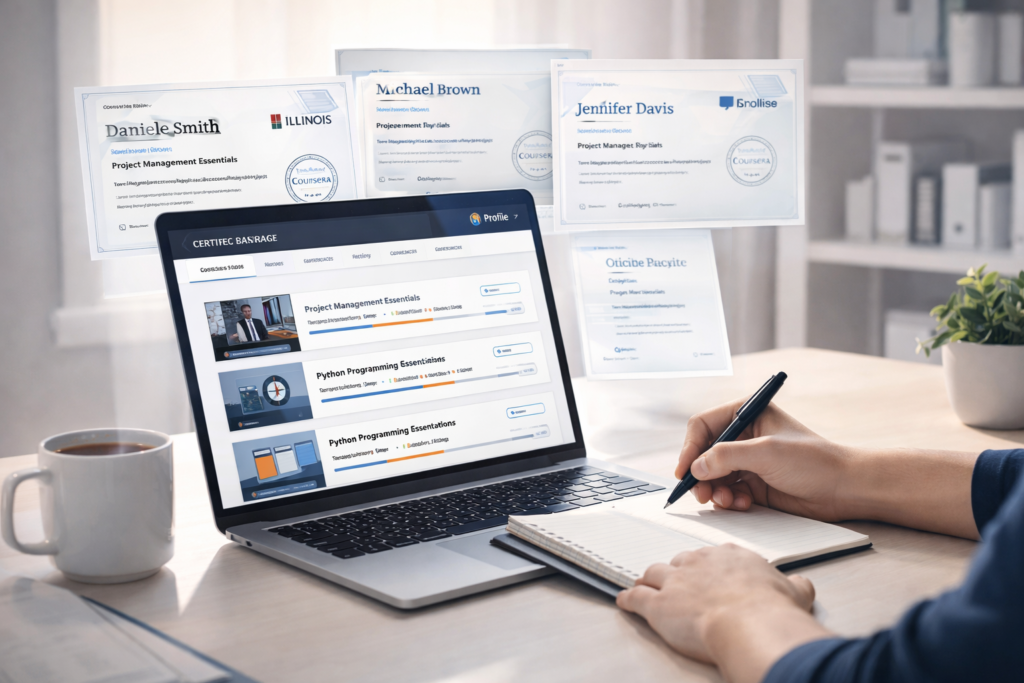
Professional certificates and specializations can add value to resumes and LinkedIn profiles.
3. Structured learning paths
Courses often include:
- Assignments
- Quizzes
- Projects
- Peer reviews
4. Professional certificates
Programs like Google IT Support or Data Analytics certificates can help people enter new careers.
Downsides of Coursera
- More expensive than Udemy
- Some courses require monthly subscriptions
- Learning pace may feel slower
Coursera is closer to online university education than a simple course marketplace.
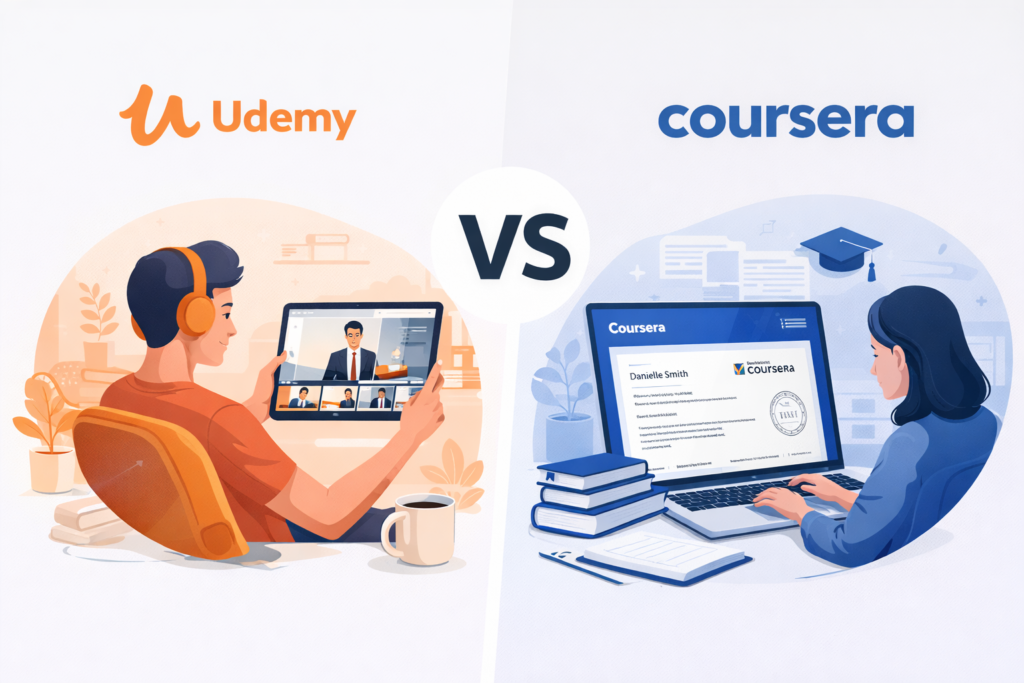
Udemy vs Coursera: Key Differences
1. Course Quality
Udemy:
Quality varies widely because instructors are independent creators.
Coursera:
Courses are produced by universities and large companies, so quality is generally more consistent.
Winner: Coursera
2. Price
Udemy:
Most courses cost $10–$20 during sales.
Coursera:
Courses may cost $39–$79 per month, and professional certificates can cost several hundred dollars.
Winner: Udemy
3. Certification Value
Udemy:
Certificates show course completion but do not carry strong academic recognition.
Coursera:
Certificates from universities or companies are more credible professionally.
Winner: Coursera
4. Learning Flexibility
Udemy:
- Fully self-paced
- Watch anytime
- Lifetime access
Coursera:
- Structured schedule
- Assignments and deadlines
Winner: Udemy
5. Career Impact
If your goal is learning a quick skill, Udemy works perfectly.
If you want career advancement or recognized credentials, Coursera is usually better.
When Should You Choose Udemy?
Udemy is the better option if you want:
- Fast practical skills
- Cheap courses
- Lifetime course access
- Learning without deadlines
It’s especially great for:
- Coding tutorials
- Digital marketing
- Freelancing skills
- Software tools
Many freelancers and entrepreneurs use Udemy to learn specific skills quickly.
When Should You Choose Coursera?
Coursera is better if you want:
- Structured professional education
- University-backed certificates
- Career transition programs
- Academic credibility
It’s ideal for:
- Data science
- Business management
- AI and machine learning
- Professional certifications
For many learners, Coursera works like a mini online university.
The Real Truth: Which Platform Is Actually Better?
Here’s the honest answer:
Udemy and Coursera are built for completely different purposes.
Udemy focuses on practical skills at a low price, while Coursera focuses on academic-quality education with recognized credentials.
So the better platform depends on your goal.
Choose Udemy if you want fast, affordable skill learning.
Choose Coursera if you want structured education and stronger certification value.
Many smart learners actually use both platforms together—Udemy for practical tools and Coursera for professional credentials.
Final Thoughts
Online learning platforms like Udemy and Coursera have transformed how people build skills and careers.
Instead of spending years in traditional classrooms, you can now gain valuable knowledge from home.
The key is choosing the platform that matches your learning style, career goals, and budget.
In the end, the best platform isn’t the one with the most courses—it’s the one that helps you apply what you learn in the real world.
Does it really value for money in 2026 ?
Udemy still have their few quality course , BTW its very personal opinion