

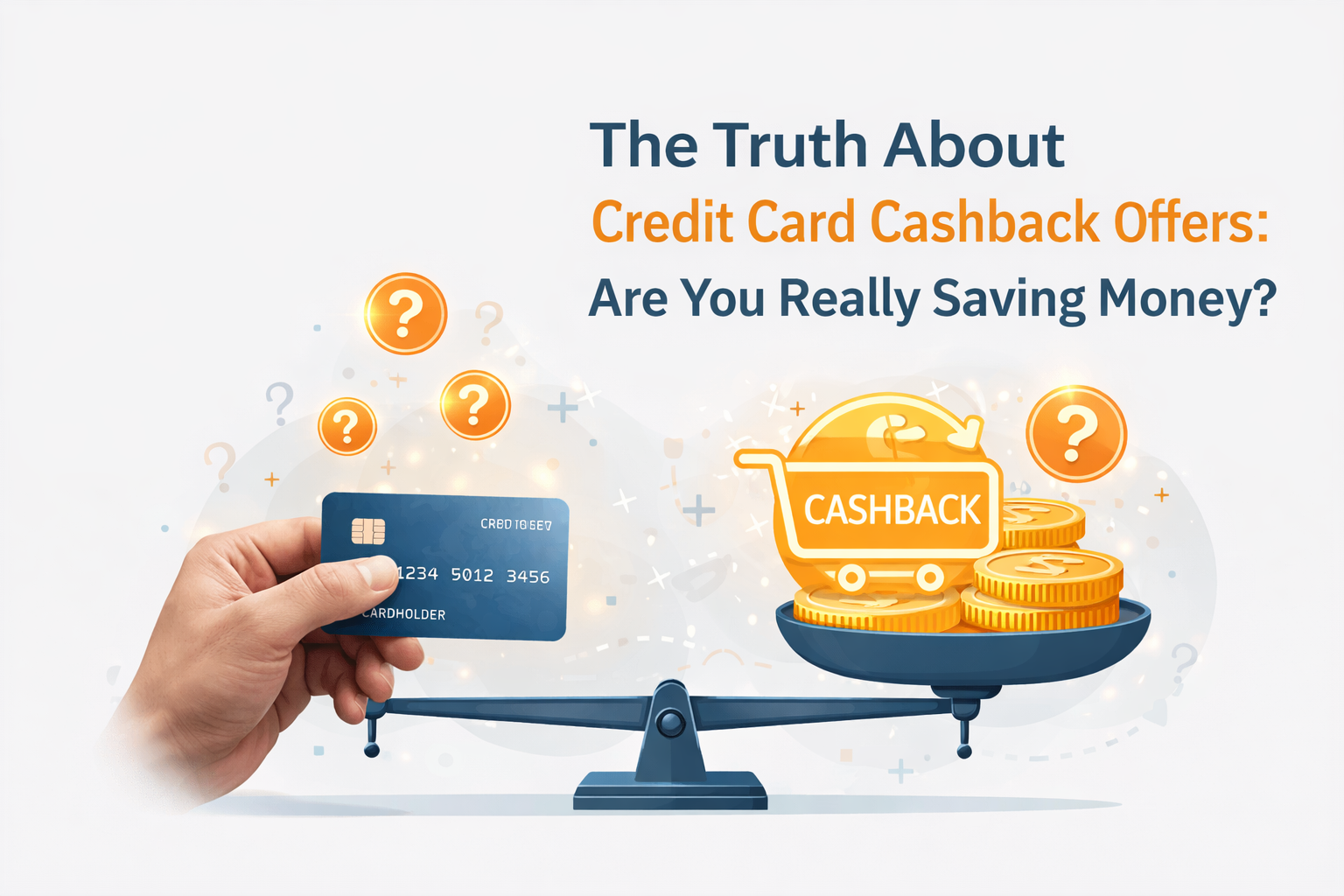
Credit card companies love to promote cashback offers during shopping seasons. From online marketplaces to retail stores, you will often see banners saying “Get 5% Cashback with Credit Card” or “Flat $20 Cashback on purchases.”
At first glance, these offers look like free money. But the real question is: Are you actually saving money, or are these offers encouraging you to spend more?
In this article, we will explore the truth behind credit card cashback offers, how they work, when they are beneficial, and when they might actually cost you more.
What Is Credit Card Cashback?
Cashback is a reward system offered by credit card companies where you receive a small percentage of your spending back as money or statement credit.
For example:
- If your card offers 5% cashback and you spend $200, you receive $10 back.
- If the offer is 2% cashback on all purchases and you spend $1000, you get $20 back.
The cashback is usually credited in one of these ways:
- Statement credit
- Bank transfer
- Reward points converted to cash
- Discount on the next purchase
From a marketing perspective, cashback is designed to encourage more spending on the credit card network.
Why Companies Offer Cashback
Many people believe cashback is simply a reward. In reality, it is also a powerful marketing strategy used by banks and card networks.
Here is why companies offer cashback:
1. Merchant Fees
Every time you use a credit card, the merchant pays a transaction fee (often 1.5%–3%).
Part of this fee funds cashback programs.
2. Increased Spending
Cashback encourages people to spend more than they normally would because they feel like they are getting a deal.
For example:
Someone planning to buy a $300 item might buy a $500 item because there is a 10% cashback offer.
3. Interest Revenue
Many cardholders do not pay the full balance every month. When that happens, banks earn high interest rates, often 18%–30% annually.
This interest revenue is far larger than the cashback given.

When Cashback Is Actually Beneficial
Cashback offers can be genuinely useful if used correctly.
You Already Planned the Purchase
If you were already going to buy something, cashback acts like a small discount.
Example:
You plan to buy groceries worth $200 and get 5% cashback.
You effectively save $10.
You Pay the Full Balance Every Month
The biggest rule for using cashback wisely is:
Always pay your credit card bill in full.
If you do this, you avoid interest and keep the cashback as pure savings.
Cashback on Essential Spending
Using cashback cards for:
- Groceries
- Fuel
- Utilities
- Travel bookings
can provide small but consistent savings over time.
For example, a family spending $1,000 monthly with a 2% cashback card earns about $240 per year.
When Cashback Can Be Misleading
Despite the benefits, cashback offers can sometimes create the illusion of savings.
Spending More Than Needed
Many cashback promotions encourage impulse purchases.
Example:
You buy a $400 gadget just because it offers $40 cashback.
But if you didn’t need the gadget, you actually spent $360 more, not saved $40.
Minimum Spending Requirements
Some offers require:
- Minimum purchase amounts
- Specific merchants
- Limited-time promotions
For example:
“Get $25 cashback when you spend $200.”
If you only needed $120 worth of items, you might spend extra just to unlock the reward.
Hidden Caps
Many cashback offers have limits like:
- Maximum $10 cashback
- Only first $300 eligible
- Limited number of redemptions
So the advertised 10% cashback might not apply to your full purchase.
Psychological Tricks Behind Cashback
Credit card companies understand consumer psychology very well.
Cashback uses several behavioral triggers:
The “Reward Feeling”
People feel like they are earning money while spending, which reduces the mental pain of paying.
Percentage Illusion
A 10% cashback sounds impressive, but if the purchase is small, the savings are minimal.
Example:
10% cashback on $50 = $5
Delayed Cost
Because credit card payments happen later, shoppers focus more on the reward than the actual cost.
Smart Ways to Use Cashback Cards
If you want to benefit from cashback without falling into spending traps, follow these strategies.
1. Treat Cashback Like a Discount
Only consider cashback if you were already planning to buy the item.
2. Track Your Spending
Use budgeting apps or monthly statements to monitor how cashback offers influence your spending behavior.
3. Avoid Carrying a Balance
Credit card interest rates are usually much higher than cashback rewards.
Example:
- Cashback: 2–5%
- Credit card interest: 20%+
If you carry a balance, the interest will erase your rewards quickly.
4. Choose the Right Cashback Card
Look for cards that offer cashback on your regular expenses, such as:
- Groceries
- Gas
- Online shopping
- Travel
This ensures the rewards come from necessary spending, not extra purchases.
The Real Truth About Cashback Offers
Cashback offers are not scams, but they are also not free money.
They are a marketing tool designed to increase spending.
If you shop wisely and pay your balance in full, cashback can function like a small rebate on your purchases.
But if cashback promotions tempt you to buy things you do not need, the reward becomes an expensive illusion.
In simple terms:
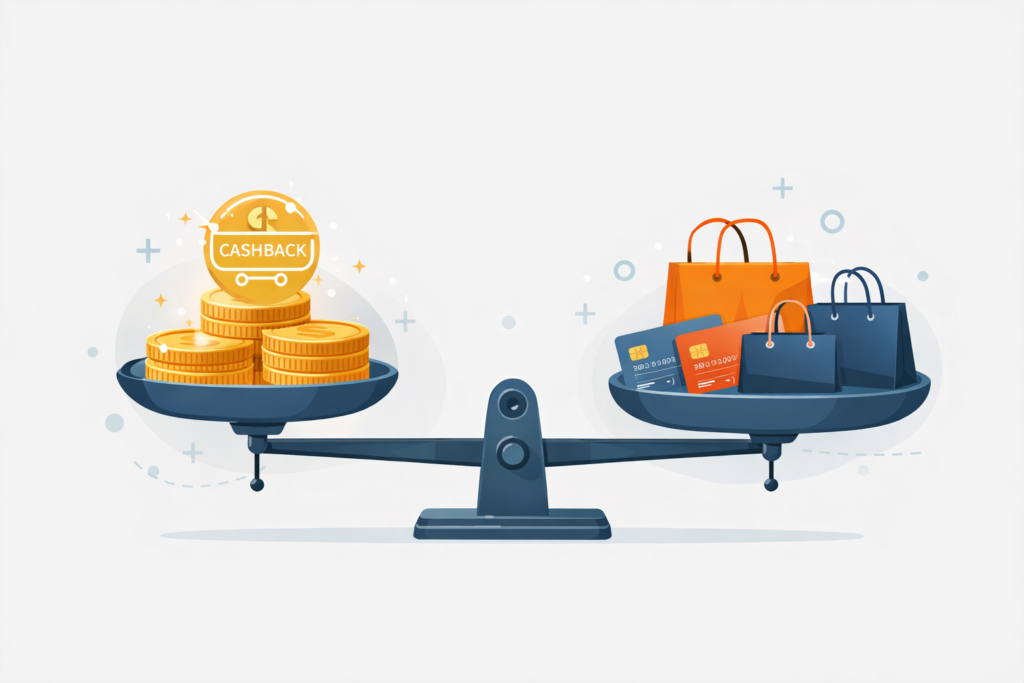
Cashback saves money only when you were going to spend that money anyway.
Final Thoughts
Credit card cashback programs can be a useful financial tool when used responsibly. They provide small rewards, convenience, and sometimes meaningful savings on everyday purchases.
However, the real key is discipline.
Use cashback as a bonus for planned spending, not as a reason to shop more.
When used smartly, cashback can help you reduce expenses over time. When used carelessly, it can quietly increase your spending without you realizing it.
So next time you see a “10% Cashback Offer”, pause for a moment and ask yourself one question:
Would I still buy this if there was no cashback?
Your answer will reveal the real value of the offer.