

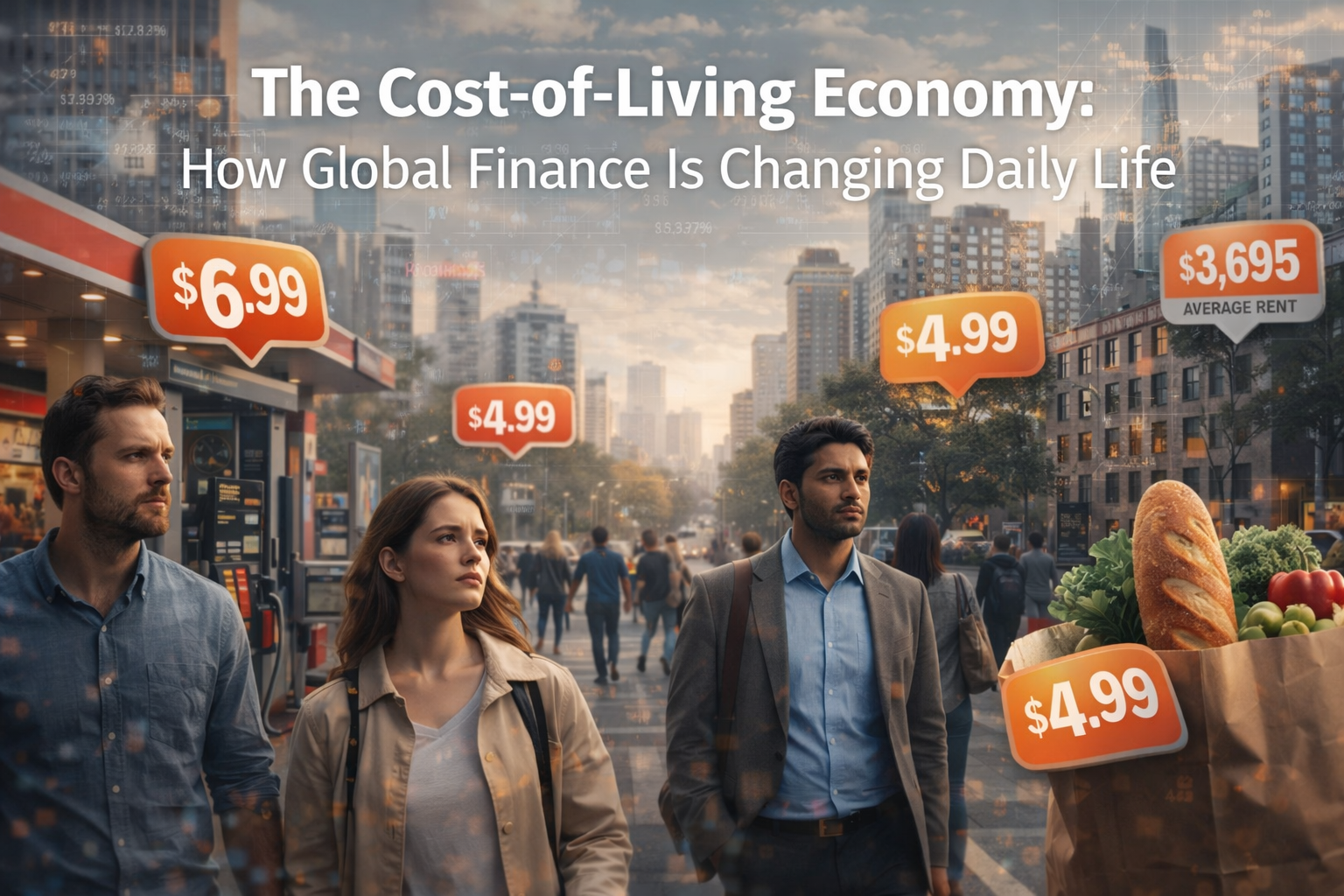
There was a time when economic trends felt distant, something discussed in newsrooms or academic circles.
Today, the cost of living is deeply personal. It shapes how people shop, travel, save, and even think about the future.
The cost-of-living economy is no longer just a financial concept. It is a lived reality influencing daily decisions across the world. From grocery prices to housing affordability, global finance now directly affects the rhythm of ordinary life.
Understanding this shift is essential for navigating financial stability in an increasingly interconnected world.
The New Financial Reality of Everyday Life
Rising prices are not just statistics.
They manifest in subtle but persistent lifestyle adjustments.
Households today are recalibrating priorities due to:
- Higher energy and transportation costs
- Increasing food and housing expenses
- Fluctuating currency values affecting purchasing power
- Rising interest rates impacting loans and mortgages
- Changing employment patterns due to economic uncertainty
These pressures create a financial environment where budgeting becomes more strategic than ever.
Modern consumers are no longer passive participants in the economy.
They are active financial decision-makers responding to global forces.
How Global Finance Shapes Local Living Standards
Global economic systems influence daily life through interconnected mechanisms.
For instance:
- Supply chain disruptions impact product availability and pricing
- Monetary policy decisions affect borrowing costs worldwide
- Commodity market fluctuations influence essential goods pricing
- International trade dynamics shape employment opportunities
These factors demonstrate how macroeconomic trends translate into microeconomic realities.
Individuals increasingly feel the effects of decisions made far beyond their immediate environments.

Changing Consumer Behavior in the Cost-of-Living Economy
Financial pressure often leads to behavioral transformation.
Consumers are adapting through:
- Prioritizing essential spending over discretionary purchases
- Seeking value-driven products and services
- Delaying large financial commitments such as home purchases
- Increasing reliance on digital financial tools
- Exploring additional income sources or flexible work models
Interestingly, these adjustments reshape market demand patterns.
Businesses must now align with consumers who value affordability and transparency more than ever.
The Psychological Impact of Rising Living Costs
Economic pressure is not only financial.
It is emotional and psychological.
Uncertainty about future expenses influences:
- Long-term financial planning
- Career decision-making
- Lifestyle aspirations
- Mental well-being
Financial stress can alter perception of stability, even in relatively strong economies.
Understanding this emotional dimension is crucial for policymakers and businesses designing economic interventions.
Technology’s Role in Navigating Financial Pressures
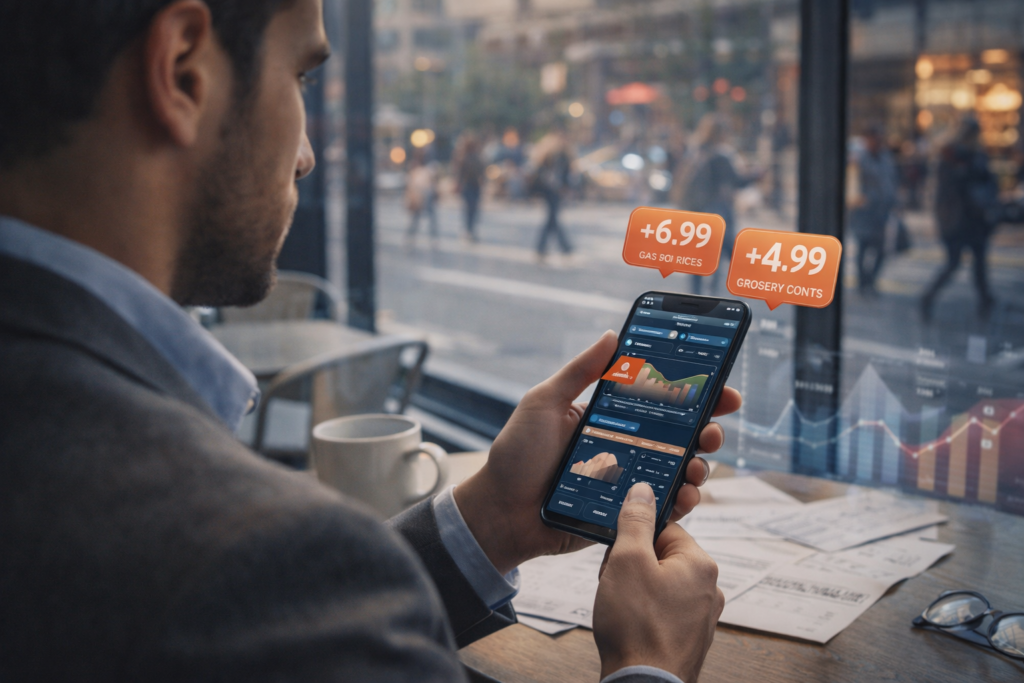
Digital financial tools are increasingly shaping how individuals manage living costs.
Fintech platforms provide:
- Real-time spending insights
- Automated savings recommendations
- Investment accessibility for broader populations
- Flexible credit and payment solutions
Technology acts as both a response to and a driver of economic transformation.
While digital tools offer convenience, they also require financial literacy to maximize benefits.
Global Inequality and Economic Adaptation
The cost-of-living economy does not affect all regions equally.
Developed economies may experience slower income growth alongside rising expenses.
Emerging markets face challenges related to currency stability and employment opportunities.
However, economic adaptation strategies vary widely.
Some societies invest heavily in social safety nets.
Others emphasize entrepreneurial resilience and digital economic participation.
This diversity shapes how global financial trends translate into local experiences.
Strategic Financial Habits for Modern Households
Navigating rising living costs requires deliberate behavioral changes.
Effective strategies include:
- Building emergency savings buffers
- Diversifying income streams where possible
- Maintaining disciplined credit usage
- Investing in skill development for career resilience
- Monitoring financial markets to anticipate changes
Financial awareness has become a core life skill rather than a specialized expertise.
The Future of the Cost-of-Living Economy
Economic cycles are evolving alongside technological and geopolitical shifts.
Future trends may include:
- Increased integration of digital currencies
- Greater reliance on automation-driven productivity
- Changing global trade relationships
- New financial policy frameworks addressing inequality
These developments suggest that cost-of-living pressures will remain a defining economic theme.
Understanding structural economic changes helps individuals adapt rather than react impulsively.
A Thoughtful Perspective on Financial Resilience
The cost-of-living economy reflects a broader transformation in how societies engage with finance.
Daily financial decisions now connect directly to global economic forces.
This reality requires a balance between cautious planning and long-term optimism.
While uncertainty persists, adaptability and informed decision-making can help individuals maintain financial stability.
Economic awareness is no longer optional.
It is an essential component of modern life.