

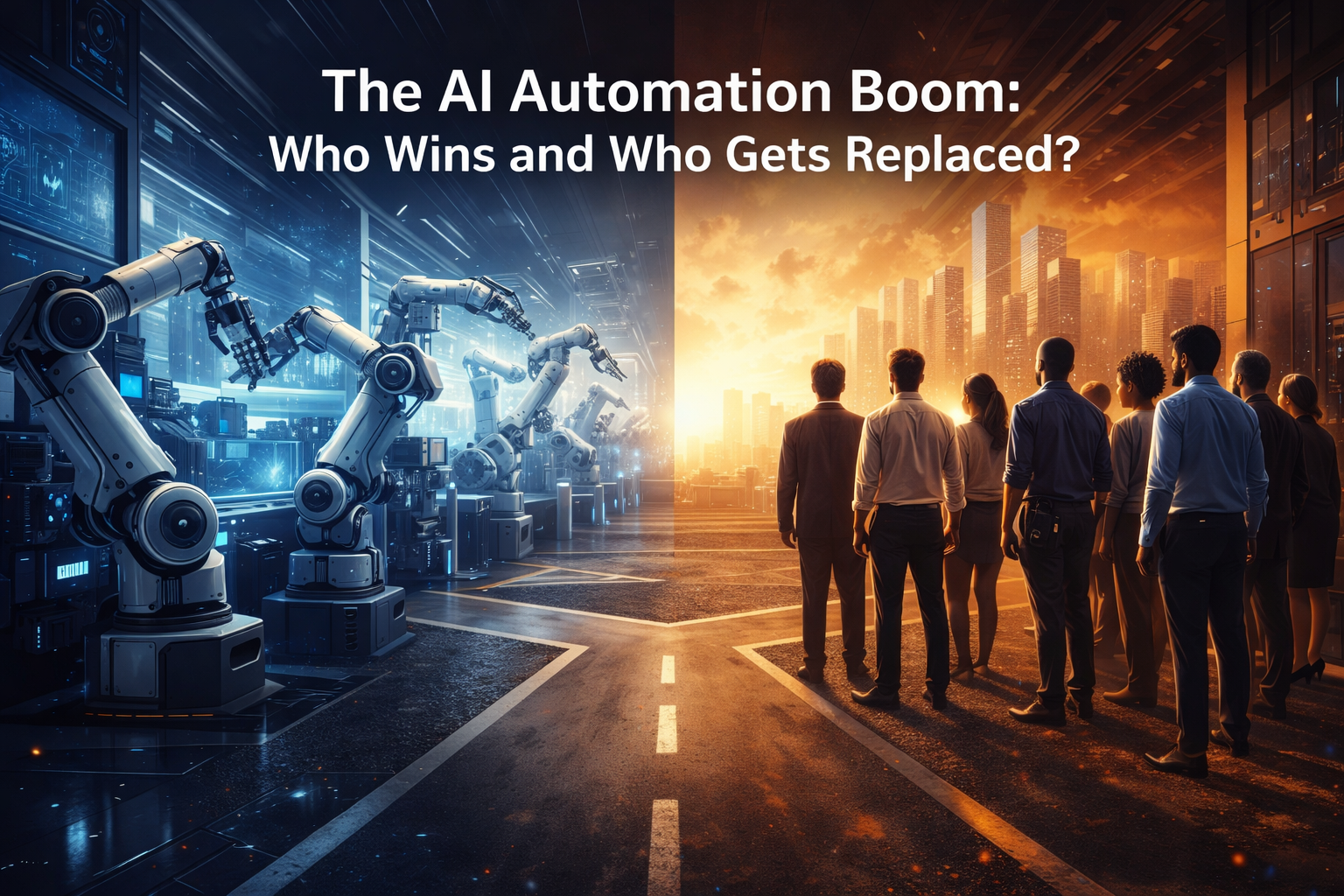
The global economy is experiencing one of the most profound transformations since the industrial revolution. Artificial intelligence and automation are reshaping how businesses operate, how value is created, and how individuals participate in the workforce.
While the AI automation boom promises unprecedented productivity and innovation, it also raises difficult questions.
Who benefits from this technological acceleration — and who risks being left behind?
Understanding this shift requires looking beyond headlines and examining the deeper structural changes taking place across industries.
Automation as the Engine of Economic Transformation
Automation is no longer limited to factory floors.
Today’s AI systems influence decision-making, logistics, customer interactions, and even creative processes.
Organizations adopting automation technologies gain advantages such as:
- Increased operational efficiency
- Reduced long-term labor costs
- Enhanced scalability in global markets
- Faster innovation cycles
- Improved predictive analytics capabilities
These advantages create competitive disparities between businesses that adapt quickly and those that struggle to integrate new technologies.
Automation is becoming a central driver of economic growth.
The Professions That Benefit Most from AI
Not all jobs face equal disruption.
Certain roles experience increased demand due to technological transformation.
Key beneficiaries include:
- AI engineers and data scientists
- Cybersecurity specialists
- Digital product managers
- Automation integration consultants
- Creative professionals leveraging AI tools
These careers align with skills that complement machine intelligence rather than compete with it.
In many cases, automation amplifies human productivity rather than replacing it.
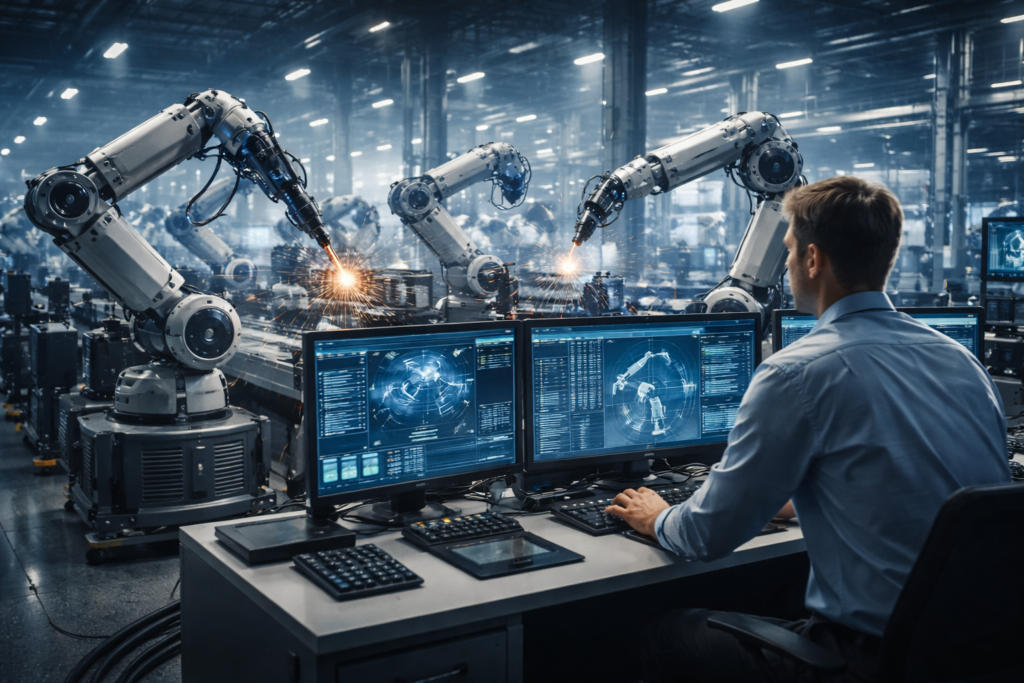
Workers Most Vulnerable to Automation
Routine-based roles face higher exposure to automation risk.
These include positions involving:
- Repetitive administrative tasks
- Predictable manufacturing processes
- Basic data entry and clerical work
- Customer service functions relying on scripted interactions
However, displacement does not necessarily mean permanent unemployment.
Historically, technological revolutions have created new categories of work even as they eliminate others.
The challenge lies in managing transitional periods.
The Psychological and Social Impacts of Workforce Transformation
Automation influences more than employment statistics.
It reshapes identity, economic security, and societal expectations.
Workers experiencing technological disruption may face:
- Uncertainty about future career relevance
- Pressure to continuously update skills
- Shifts in professional self-perception
- Increased reliance on gig or flexible work models
Addressing these psychological dimensions is essential for sustainable economic transition.

Economic Winners in the Automation Era
Beyond individual careers, entire industries are benefiting from AI-driven efficiency.
Sectors experiencing rapid growth include:
- Financial technology and digital banking
- Healthcare analytics and biotechnology
- Renewable energy systems
- Smart logistics and supply chain optimization
- Digital entertainment and content platforms
Investment flows increasingly favor businesses capable of leveraging automation strategically.
This concentration of technological advantage contributes to evolving global economic hierarchies.
Policy, Education, and the Future Workforce
Governments and educational institutions play crucial roles in shaping the automation transition.
Key priorities include:
- Expanding access to digital skills training
- Supporting workforce mobility across sectors
- Encouraging innovation while protecting social stability
- Updating labor regulations to reflect technological realities
Balanced policy frameworks can help mitigate inequality while promoting growth.
Human Skills That Machines Cannot Replace
Despite rapid technological progress, certain human capabilities remain uniquely valuable.
These include:
- Emotional intelligence and interpersonal communication
- Ethical judgment and complex decision-making
- Creative problem-solving
- Strategic leadership
- Cultural adaptability
The future workforce will likely emphasize collaboration between human insight and machine efficiency.
A Thoughtful Perspective on the Automation Boom
The AI automation boom is neither purely beneficial nor purely disruptive.
It represents a structural evolution in how economies function.
Technological progress historically generates both opportunity and displacement.
The outcome depends largely on how societies manage transition.
Individuals who invest in adaptable skillsets and organizations that integrate automation responsibly are most likely to thrive.
Rather than viewing automation as a threat, understanding its dynamics enables more informed participation in the emerging economic landscape.
Now a days AI and Automation makes the tech world very easy, but you a person learn a proper skill based on AI & Automation obviously he would get the best opportunity to perform a superb work on the tech world. So should have to learn skill properly. By the way, this content is superb, but need to be a little bit specific. Thanks