
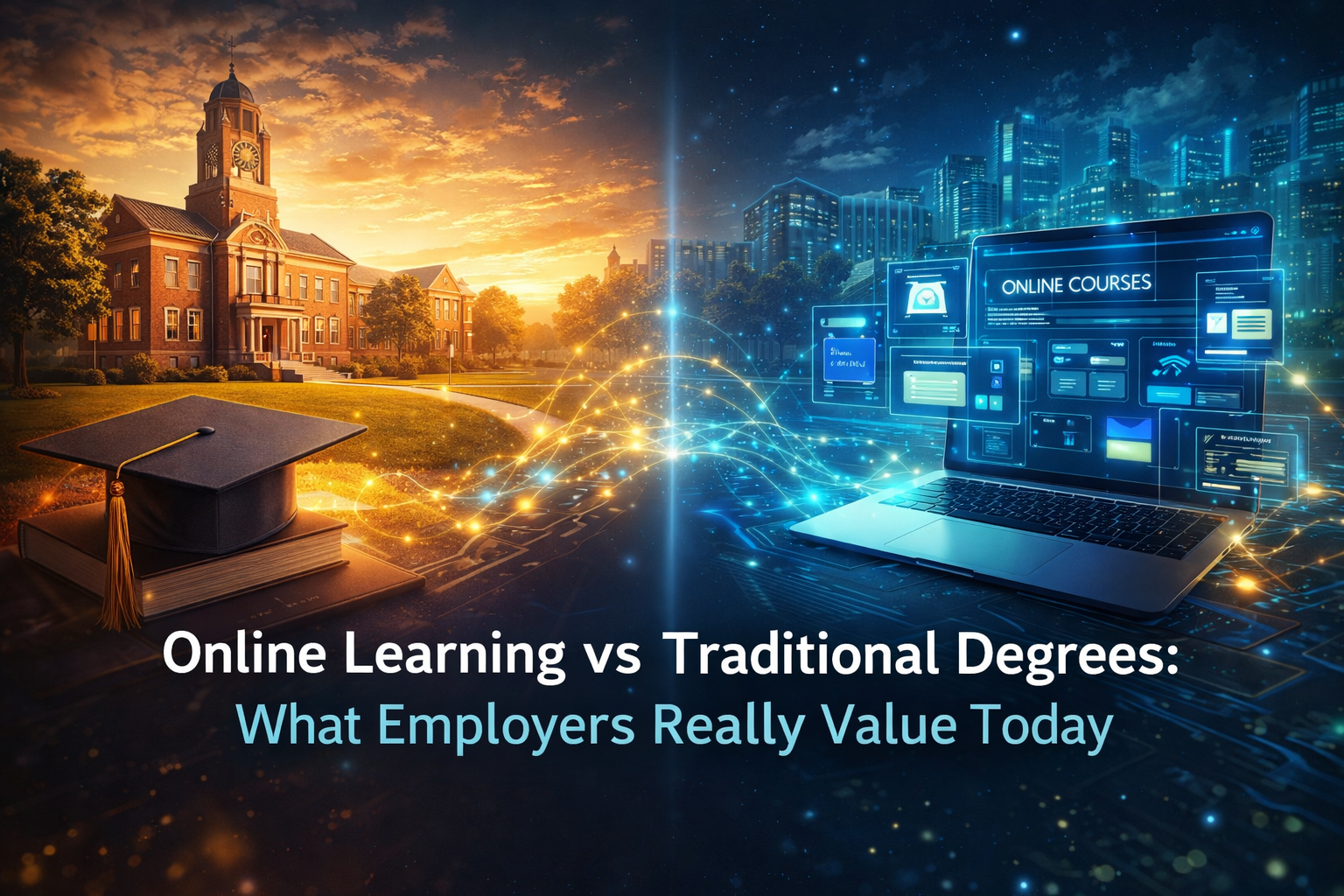
The global education landscape is undergoing a major transformation. With the rapid growth of digital technology, online learning has become a powerful alternative to traditional university degrees. Students now have more choices than ever before, and employers are increasingly adapting their hiring practices to reflect this shift.
But the question remains: What do employers truly value today — online certifications or traditional academic degrees? Understanding this evolving dynamic is essential for students, professionals, and organizations aiming to stay competitive in the modern job market.
The Rise of Online Learning in the Digital Economy
Online learning platforms have expanded access to education across the globe. Courses from leading institutions and industry experts are now available on demand, allowing learners to acquire skills at their own pace.
Unlike traditional education systems, online learning emphasizes practical knowledge and real-world applications. Fields such as digital marketing, programming, data analytics, and design have seen significant growth in online certification programs.
Employers increasingly recognize that skills and competencies matter more than formal credentials alone, especially in fast-evolving industries like technology and digital business.
SEO Keywords: online learning benefits, digital education trends, skill-based hiring

The Enduring Value of Traditional Degrees
Despite the rise of online education, traditional degrees continue to hold significant importance in many sectors. Fields such as medicine, engineering, law, and academia still require structured academic training and accredited qualifications.
Traditional universities provide not only theoretical knowledge but also networking opportunities, campus experiences, and institutional credibility. Employers often associate formal degrees with discipline, long-term commitment, and foundational expertise.
However, the perceived value of traditional education is evolving. Employers are increasingly evaluating candidates based on practical skills, adaptability, and problem-solving abilities rather than academic pedigree alone.
SEO Keywords: traditional degree value, university education benefits, academic qualifications importance
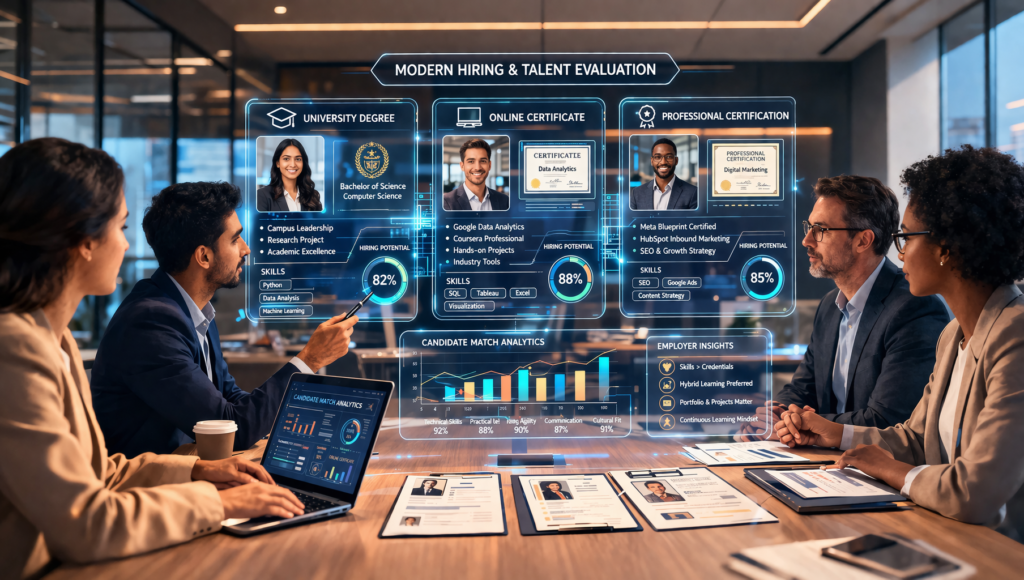
What Employers Really Prioritize Today
In today’s dynamic job market, employers focus on a combination of factors:
- Practical skills and real-world experience
- Continuous learning and adaptability
- Problem-solving and critical thinking
- Communication and collaboration abilities
- Digital literacy and technological competence
Online learners often demonstrate initiative and self-motivation, which are highly valued traits. Meanwhile, traditional graduates may bring structured knowledge and professional networks.
The ideal candidate increasingly combines both — leveraging formal education while continuously upgrading skills through online learning.
SEO Keywords: employer hiring trends, skill-based recruitment, future job requirements
Industry-Specific Perspectives on Education
Different industries view online learning and traditional degrees differently. Technology companies often prioritize demonstrable skills and project portfolios. Creative industries value experience and innovation over formal credentials.
Conversely, regulated professions maintain strict academic requirements. This divergence highlights the importance of understanding industry expectations when choosing an educational path.
As hybrid education models emerge, the distinction between online and traditional learning is becoming less rigid.
SEO Keywords: industry hiring preferences, education trends by sector, hybrid learning models
The Role of Lifelong Learning in Career Growth
The modern workforce requires continuous skill development. Rapid technological advancements mean that knowledge acquired during university studies may become outdated within a few years.
Online learning platforms enable professionals to stay updated and relevant throughout their careers. Employers increasingly value candidates who demonstrate commitment to lifelong learning and professional development.
This shift reflects a broader transformation from degree-focused education to competency-driven career progression.
SEO Keywords: lifelong learning importance, professional skill development, continuous education trends
The Future of Education and Employment
Looking ahead, the future of education will likely integrate both online and traditional approaches. Universities are incorporating digital learning tools, while online platforms are partnering with academic institutions to provide accredited programs.
Employers will continue to prioritize skills, adaptability, and practical expertise over rigid educational pathways. This evolution will create a more flexible and inclusive job market, enabling individuals from diverse backgrounds to succeed.
Ultimately, the debate between online learning and traditional degrees is not about choosing one over the other — it is about leveraging the strengths of both to build a resilient and future-ready workforce.
Conclusion
Online learning and traditional degrees each offer unique advantages. While traditional education provides structured knowledge and credibility, online learning empowers individuals with flexibility, accessibility, and practical skill acquisition.
In today’s competitive job market, employers value a balanced combination of formal qualifications and continuous skill development. The most successful professionals will be those who embrace lifelong learning and adapt to the evolving demands of the digital economy.
As education continues to transform, the real focus will shift from where you learned to what you can do.