

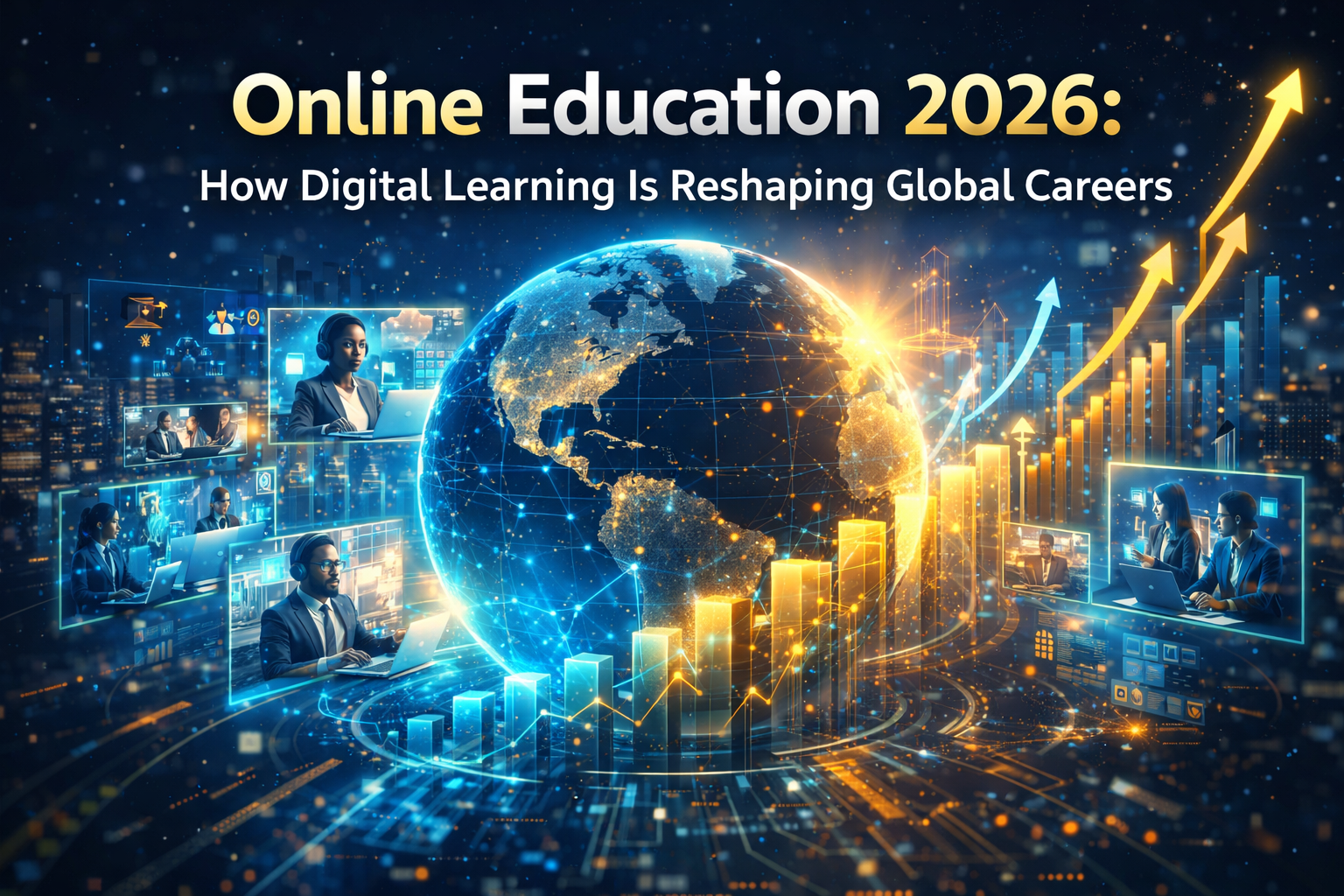
The landscape of education and employment is undergoing a significant transformation. In 2026, online education is no longer just an alternative to traditional learning — it has become a powerful force reshaping global career paths. From flexible skill-based certifications to AI-powered learning platforms, digital education is redefining how individuals prepare for the modern workforce.
As industries evolve and demand for specialized skills increases, online learning is emerging as a key driver of career mobility, professional growth, and global employment opportunities. This article explores how digital education is transforming careers worldwide and what it means for the future of work.
The Rise of Digital Learning in a Globalized Economy
Online education platforms have expanded access to quality learning resources across geographical boundaries. Students and professionals can now acquire in-demand skills from international institutions without relocating or disrupting their careers.
This shift is promoting a more inclusive global workforce by reducing barriers related to location, cost, and traditional academic structures. As digital connectivity improves, the adoption of online learning continues to accelerate worldwide.
Skill-Based Learning Is Replacing Degree-Centric Models
Employers are increasingly prioritizing practical skills over formal academic credentials. Digital learning platforms offer targeted courses focused on industry-specific competencies, enabling learners to develop relevant expertise quickly.
Popular areas of online education growth include:
- Artificial intelligence and data science
- Digital marketing and e-commerce
- Cybersecurity and cloud computing
- Entrepreneurship and remote work skills
This shift toward skill-based learning is reshaping recruitment strategies and career development pathways.

Flexibility and Lifelong Learning Opportunities
One of the most transformative aspects of online education is flexibility. Learners can balance education with professional and personal responsibilities, making continuous skill development more accessible.
In a rapidly changing job market, lifelong learning has become essential. Online platforms support continuous upskilling and reskilling, enabling individuals to adapt to evolving industry demands.
Technology Driving Career Transformation
Advancements in AI, virtual reality, and adaptive learning technologies are enhancing the effectiveness of digital education. AI-powered platforms personalize learning experiences, while immersive simulations provide hands-on training in virtual environments.
These innovations improve knowledge retention, engagement, and practical skill development, preparing learners for real-world professional challenges.
Global Remote Work and Career Mobility
The growth of remote work has increased the relevance of online education. Professionals can now acquire new skills and access job opportunities in global markets without geographical constraints.
Digital education supports career mobility by enabling individuals to align their learning with international employment trends.

Challenges and Considerations in Online Education
Despite its advantages, digital learning also presents challenges such as varying course quality, limited face-to-face interaction, and self-discipline requirements.
Ensuring credible certification, maintaining motivation, and developing networking opportunities remain key considerations for online learners.
Educational institutions and technology providers must collaborate to enhance digital learning standards and accessibility.
The Future of Careers in a Digital Learning Era
The future workforce will increasingly rely on digital education for professional development. Hybrid learning models combining online and traditional education are expected to dominate.
Organizations will also invest in employee upskilling programs, integrating online learning into corporate training strategies.
As automation and technological innovation reshape industries, digital education will play a critical role in preparing individuals for emerging career opportunities.
Final Thoughts
Online education in 2026 is transforming how individuals build careers, acquire skills, and adapt to global economic changes. By offering flexible, accessible, and industry-focused learning opportunities, digital education is reshaping the future of work.
Individuals who embrace continuous learning and technological innovation will be better positioned to succeed in an increasingly competitive global job market.
The integration of online education into professional development is not just a trend — it is a defining feature of the modern career landscape.