

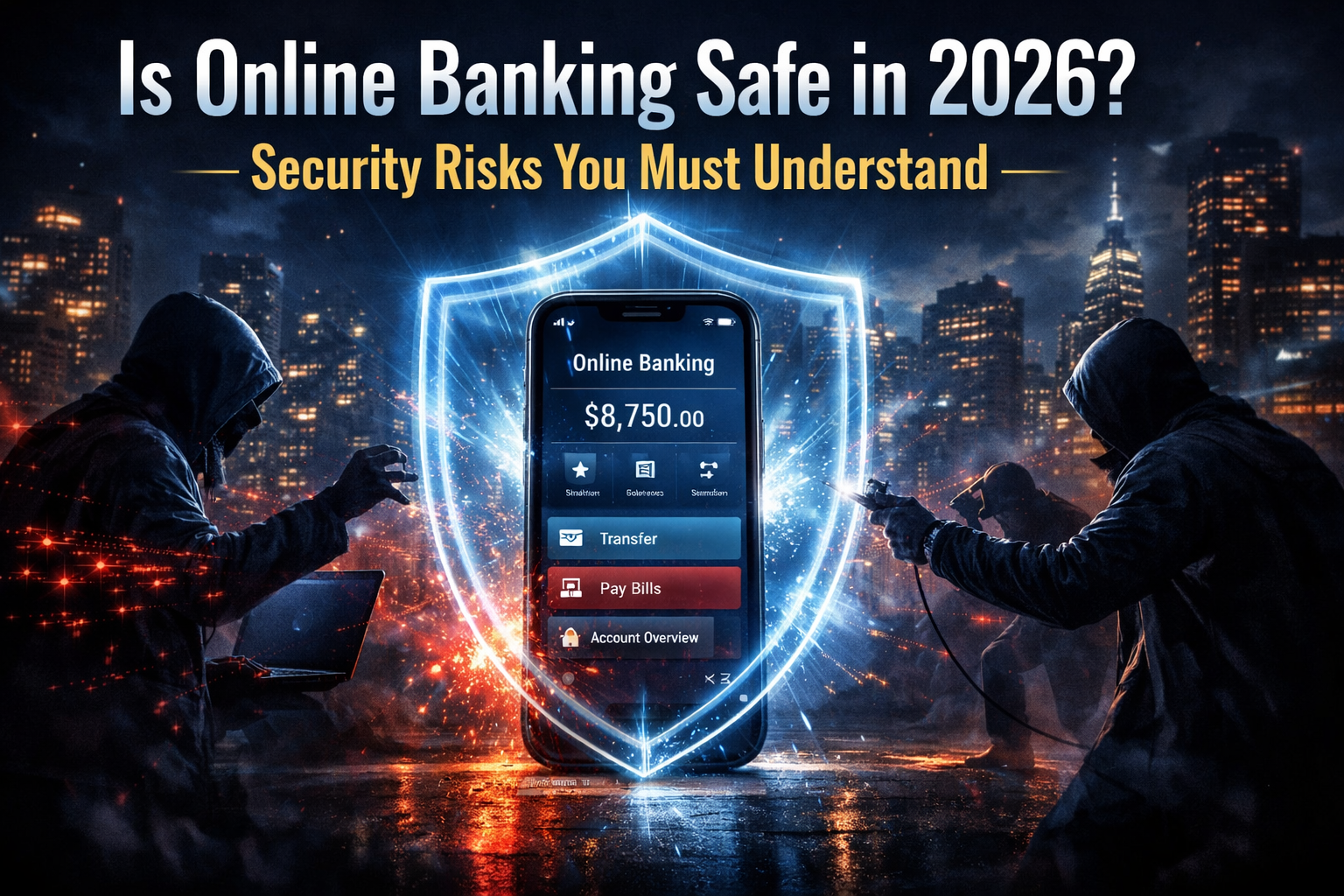
Online banking has transformed financial convenience.
From instant transfers to real-time budgeting tools, digital banking platforms have become essential to modern life. Yet with this convenience comes a critical question: Is online banking truly safe in 2026?
The reality is complex.
Digital banking security has improved dramatically, but cyber threats are evolving just as quickly. Understanding the risks — and how to manage them — is essential for protecting your financial future.
The Evolution of Online Banking Security
Financial institutions invest billions in cybersecurity infrastructure each year.
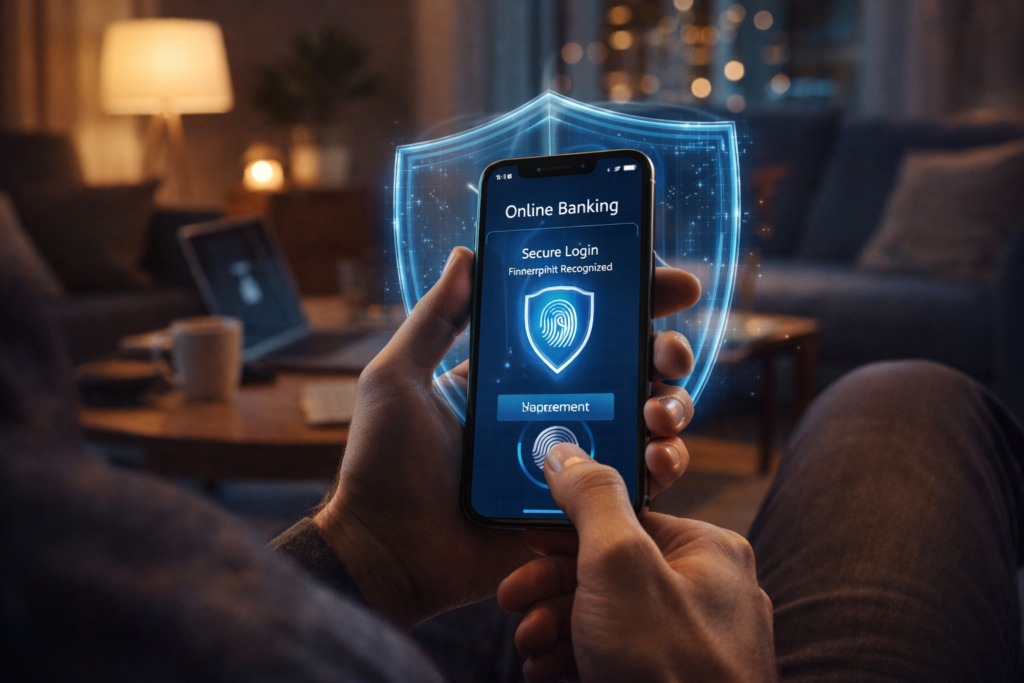
Advanced encryption, biometric authentication, and AI-driven fraud detection systems now form the backbone of digital banking.
Key security advancements include:
- Multi-factor authentication and biometric logins
- Real-time transaction monitoring
- Behavioral analytics for fraud detection
- End-to-end encryption protocols
- Secure cloud-based financial infrastructures
These measures significantly reduce risks compared to early online banking systems.
However, technology alone cannot eliminate vulnerabilities.
Human Behavior Remains the Weakest Link
Most online banking breaches occur not due to system failures, but because of user behavior.
Common risky habits include:
- Reusing weak passwords across financial platforms
- Ignoring software updates on devices
- Falling victim to phishing or social engineering attacks
- Accessing banking apps over unsecured public networks
Cybercriminals increasingly exploit psychological vulnerabilities rather than technical loopholes.
This makes financial awareness as important as technological safeguards.

The Rise of AI-Driven Cyber Threats
Artificial intelligence has enhanced cybersecurity defenses, but it has also empowered attackers.
Emerging risks include:
- AI-generated phishing messages that mimic legitimate institutions
- Automated hacking tools targeting financial databases
- Deepfake technology used in identity fraud
- Sophisticated malware designed to bypass traditional detection
These threats highlight the dynamic nature of digital financial security.
Financial institutions must continuously update defense mechanisms to stay ahead.
Data Privacy and Digital Trust
Beyond direct financial theft, data privacy concerns shape perceptions of online banking safety.
Users increasingly worry about:
- Unauthorized sharing of financial data
- Data breaches exposing personal information
- Surveillance through financial transaction tracking
- Long-term implications of digital identity storage
Trust in digital banking depends not only on preventing fraud but also on ensuring ethical data management.
Transparency in how financial data is handled strengthens user confidence.
Financial Institutions vs Cybercriminal Innovation
The cybersecurity landscape resembles a continuous arms race.
Banks invest heavily in security infrastructure, while cybercriminal networks adapt rapidly.
Current defense strategies focus on:
- AI-powered anomaly detection
- Blockchain-based transaction security
- Continuous authentication technologies
- Enhanced regulatory compliance frameworks
This ongoing competition drives innovation in financial technology while shaping regulatory policies.
User Responsibility in Digital Financial Safety
Security is not solely the responsibility of financial institutions.
Individual actions significantly influence risk exposure.
Best practices include:
- Using unique, complex passwords
- Enabling multi-factor authentication
- Avoiding financial transactions on public Wi-Fi
- Monitoring account activity regularly
- Educating oneself about emerging cyber threats
Financial literacy now includes cybersecurity awareness.
The Psychological Dimension of Online Banking Trust
Trust in online banking is influenced by both experience and perception.
High-profile cyber incidents can reduce confidence, even if personal risk remains statistically low.
Conversely, seamless digital experiences can increase reliance on online financial systems.
Balancing trust and caution is essential for responsible digital banking usage.
The Future Outlook of Online Banking Security
Digital banking will continue evolving alongside technological innovation.
Future developments may include:
- Fully decentralized financial security systems
- AI-driven personalized cybersecurity protection
- Biometric identity becoming the primary authentication method
- Integration of quantum-resistant encryption technologies
These advancements aim to strengthen digital trust while maintaining financial accessibility.
A Thoughtful Perspective on Digital Financial Safety
Online banking in 2026 is both safer and riskier than ever before.
Safer due to advanced security infrastructure, riskier because of increasingly sophisticated cyber threats.
Understanding this dual reality allows users to make informed financial decisions.
Digital financial empowerment depends not only on technology but also on awareness, discipline, and adaptability.
In an interconnected world, security is not a static achievement.
It is an ongoing process.