

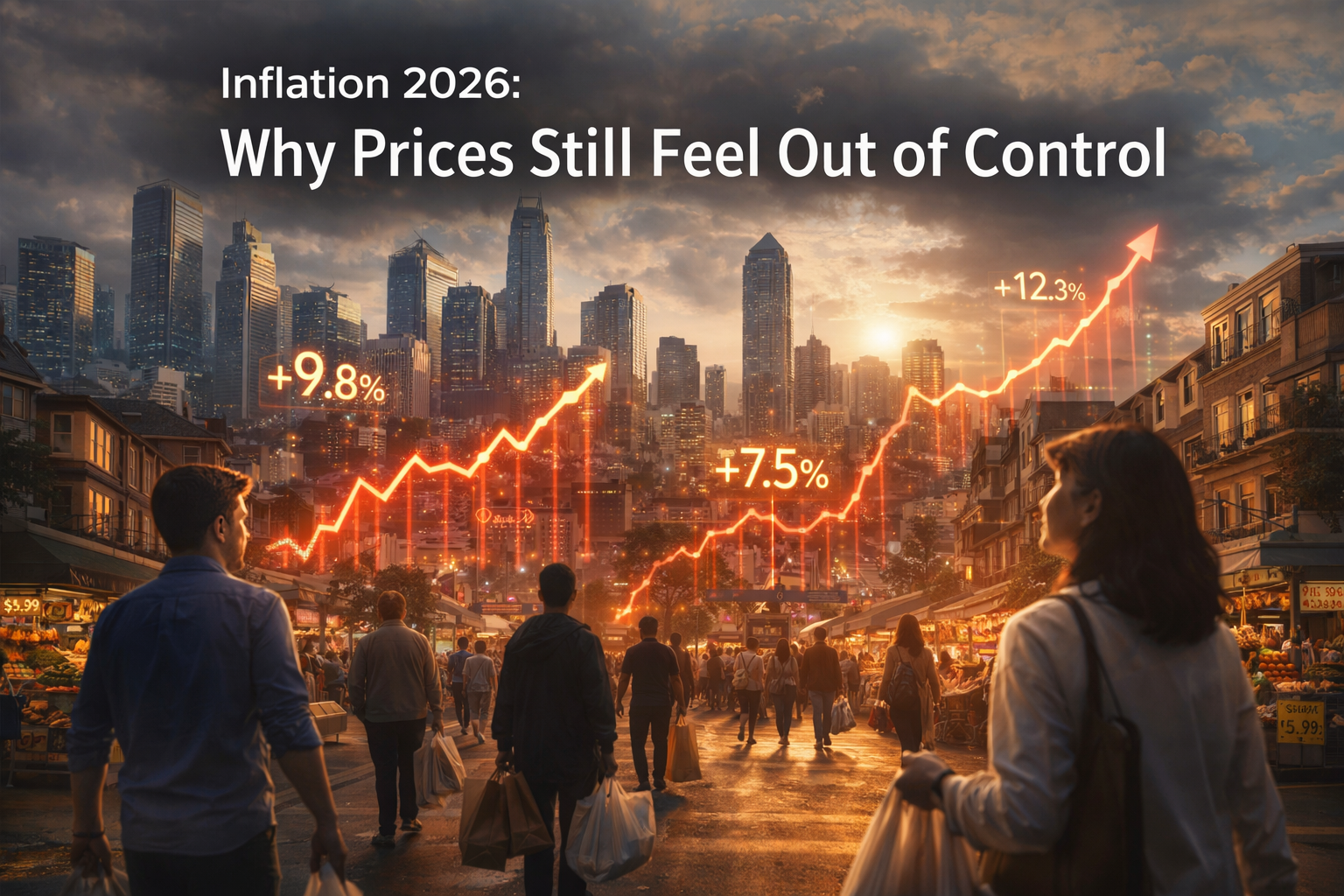
Inflation has become more than an economic term.
It is now a daily experience shaping how people shop, save, and plan their future. Even as some economies report moderate inflation rates, many households continue to feel financial pressure.
The question in 2026 is no longer just about rising prices.
It is about why inflation still feels out of control despite policy interventions and technological progress.
Understanding this disconnect between economic data and lived experience reveals deeper structural changes in global financial systems.
The Hidden Layers of Modern Inflation
Inflation today is not driven by a single factor.
Instead, it emerges from overlapping economic dynamics.
Key contributors include:
- Supply chain disruptions affecting essential goods
- Persistent energy market volatility
- Wage growth lagging behind price increases
- Currency fluctuations impacting import costs
- Long-term consequences of pandemic-era fiscal policies
These interconnected pressures create a financial environment where price stability remains elusive.
Inflation is no longer a short-term cycle.
It reflects structural economic transformation.
Why Inflation Feels Worse Than Official Numbers
Many individuals notice that official inflation statistics do not always match personal experiences.
This perception gap arises because:
- Essential expenses like housing and food rise faster than average inflation
- Lifestyle costs such as education and healthcare increase disproportionately
- Income growth often fails to keep pace with real purchasing power declines
As a result, economic indicators may suggest stabilization while households continue to experience financial strain.
This disconnect contributes to growing financial anxiety and cautious consumer behavior.

Global Factors Amplifying Inflation Pressure
Inflation in 2026 reflects globalization’s complexity.
Geopolitical tensions, trade realignments, and environmental disruptions influence:
- Commodity market stability
- Transportation and logistics costs
- Agricultural production cycles
- Currency exchange dynamics
These global forces ripple through local economies, shaping everyday living costs.
Consumers may not track international market developments, yet their financial decisions are increasingly influenced by them.
The Psychological Impact of Persistent Inflation
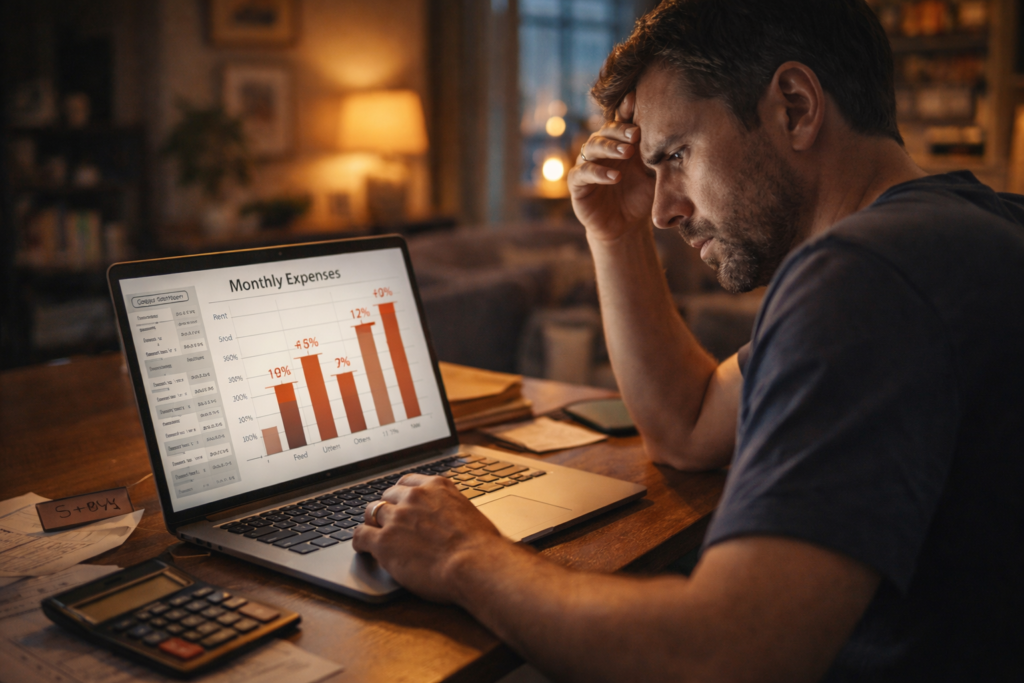
Economic pressure affects more than purchasing power.
It reshapes mindset and lifestyle expectations.
Common behavioral shifts include:
- Reduced discretionary spending
- Delayed major financial commitments
- Increased focus on savings and financial security
- Preference for value-driven consumption
Persistent inflation alters long-term financial planning.
It encourages households to adopt defensive financial strategies.
Central Bank Policies and Their Real-World Effects
Monetary authorities continue to adjust interest rates and liquidity measures to stabilize inflation.
However, policy impacts are often uneven.
Higher interest rates may:
- Reduce borrowing and investment activity
- Stabilize currency values
- Slow economic growth temporarily
- Influence housing affordability
While these measures aim to control inflation, they can also introduce new financial challenges for households and businesses.
Economic stabilization is a delicate balancing act.
Technology’s Dual Role in Inflation Dynamics
Technological innovation has both inflationary and deflationary effects.
On one hand, automation improves productivity and reduces costs.
On the other, digital transformation introduces new expense categories such as subscription services and digital infrastructure investments.
This dual impact contributes to evolving inflation patterns.
Consumers must adapt to a financial landscape shaped by technological change as much as traditional economic factors.
Income Inequality and Cost-of-Living Pressures
Inflation does not affect all demographics equally.
Households with limited income growth experience:
- Greater vulnerability to price shocks
- Reduced financial mobility
- Increased reliance on credit mechanisms
Meanwhile, higher-income groups may absorb inflation more easily.
This disparity influences social perceptions of economic stability and fairness.
The Future Outlook of Inflation Trends
Looking ahead, inflation dynamics will likely be shaped by:
- Energy transition policies
- Global trade restructuring
- Technological productivity gains
- Demographic changes influencing labor markets
These factors suggest inflation will remain a central economic theme rather than a temporary anomaly.
Understanding long-term structural drivers enables more strategic financial planning.
A Thoughtful Perspective on Navigating Inflation
Inflation in 2026 is not simply about rising prices.
It reflects broader economic transitions affecting how wealth is created and distributed.
Households that develop adaptive financial habits — such as disciplined budgeting, diversified income strategies, and informed investment decisions — are better positioned to manage uncertainty.
While inflation may feel overwhelming, awareness and strategic planning can transform financial vulnerability into resilience.
Economic realities evolve, but informed decision-making remains a powerful tool for maintaining stability.