

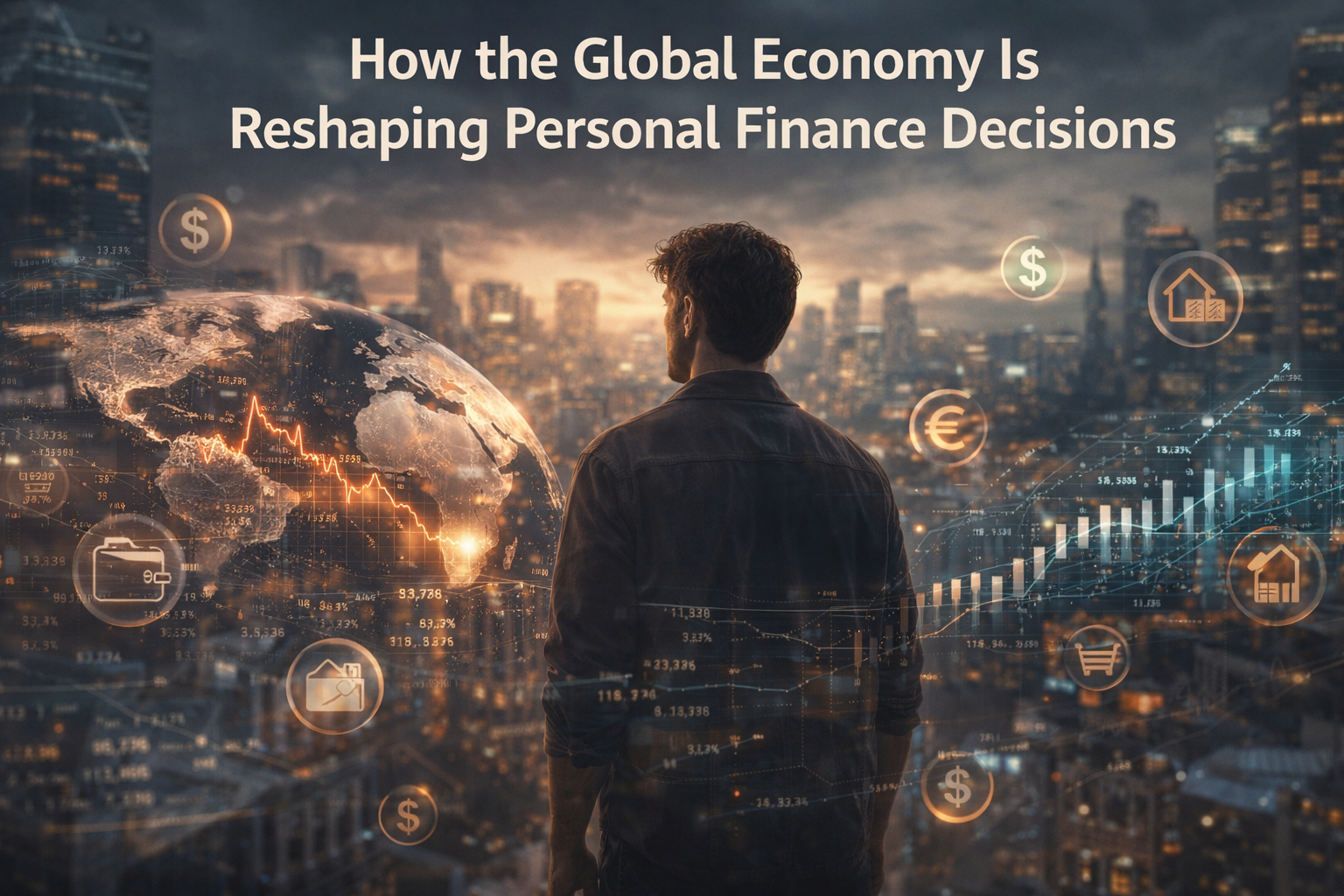
Personal finance used to be deeply local.
Your salary, living costs, and investment options were mostly influenced by your immediate environment. Today, that reality has changed.
In 2026, global economic shifts — from inflation trends to digital financial innovation — are directly shaping how individuals make everyday financial decisions. The boundaries between global markets and personal money management are fading.
Understanding how the global economy reshapes personal finance decisions is becoming essential for financial stability.
The Interconnected Nature of Modern Financial Life
Globalization has transformed the way financial systems interact.
Economic developments in one region can quickly influence:
- Currency value fluctuations
- Interest rate adjustments
- Investment market performance
- Employment opportunities
- Cost of essential goods
For individuals, this interconnectedness means personal financial planning now requires awareness of global trends.
Decisions about saving, investing, and spending increasingly reflect broader economic signals rather than purely local conditions.
Inflation and Purchasing Power in a Global Context
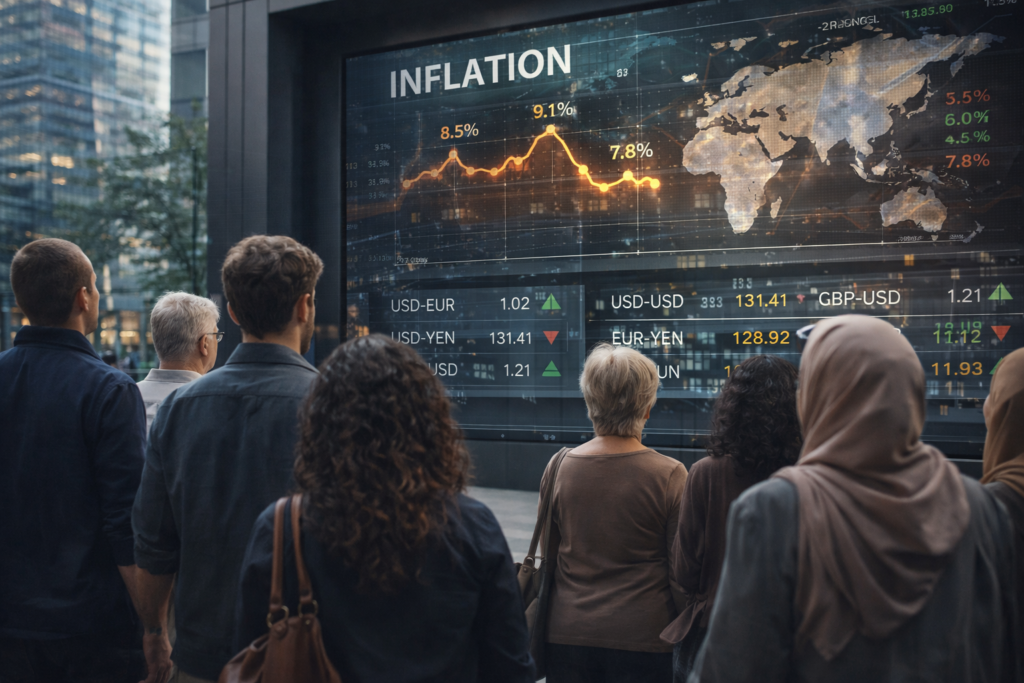
Inflation remains one of the most visible ways global economics affects personal finance.
Price increases in energy, food, and housing often result from international supply chain dynamics or geopolitical factors.
As a result, households are adapting by:
- Prioritizing essential spending categories
- Exploring alternative income sources
- Reassessing long-term financial commitments
- Adjusting investment strategies to hedge inflation risk
These adjustments demonstrate how macroeconomic forces translate into daily financial behavior.
Technology’s Role in Bridging Global and Personal Finance
Digital financial platforms have accelerated the connection between global markets and individual investors.
Modern fintech tools allow individuals to:
- Invest in international markets
- Monitor global economic data in real time
- Access diversified financial products
- Manage cross-border transactions efficiently
This democratization of financial access is reshaping wealth-building strategies.
However, increased accessibility also requires higher financial literacy to navigate risks effectively.
Employment Trends and Income Stability
The global economy influences personal finance through labor market transformations.
Automation, remote work, and digital entrepreneurship are redefining income structures.
Professionals are increasingly:
- Building multiple income streams
- Participating in global freelance markets
- Investing in skill development aligned with technological trends
- Reassessing long-term career stability
These changes affect how individuals plan for savings, investments, and retirement.
Financial planning is becoming more dynamic as employment models evolve.

Investment Strategies in a Globalized Financial System
Personal investment decisions now reflect global market dynamics more than ever.
Individuals consider:
- International diversification to reduce risk
- Exposure to emerging market growth
- Digital asset ecosystems
- Sustainable and impact-focused investments
These strategies highlight the shift from localized wealth management to globally informed financial planning.
Understanding global economic cycles enables more resilient investment approaches.
Psychological Impacts of Economic Globalization
Financial decision-making is not purely analytical.
It is influenced by perception, uncertainty, and social narratives.
Global economic volatility can create:
- Heightened financial anxiety
- Risk-averse consumer behavior
- Increased emphasis on financial security
- Delayed major life investments
Developing emotional resilience alongside financial literacy is becoming an important aspect of personal finance.
Policy Changes and Their Personal Consequences
Government policies responding to global economic challenges often have direct personal implications.
Examples include:
- Tax reforms affecting disposable income
- Monetary policies influencing borrowing costs
- Social welfare adjustments shaping financial safety nets
- Trade regulations impacting employment sectors
Awareness of policy trends allows individuals to anticipate financial changes rather than react after they occur.
The Future of Personal Finance in a Global Economy
As globalization continues to evolve, personal finance will become increasingly interconnected with macroeconomic dynamics.
Future trends may include:
- Greater integration of digital currencies
- Increased reliance on AI-driven financial planning tools
- Changing global labor mobility patterns
- Enhanced focus on financial sustainability
These developments suggest that financial adaptability will be a defining skill for future economic participation.
A Thoughtful Perspective on Financial Awareness
The global economy is no longer an abstract concept influencing distant markets.
It is a daily presence shaping how individuals spend, save, and invest.
Recognizing this interconnected reality allows for more informed financial decisions.
Personal finance in 2026 requires both local awareness and global perspective.
Those who understand this balance are better positioned to build long-term financial resilience.