

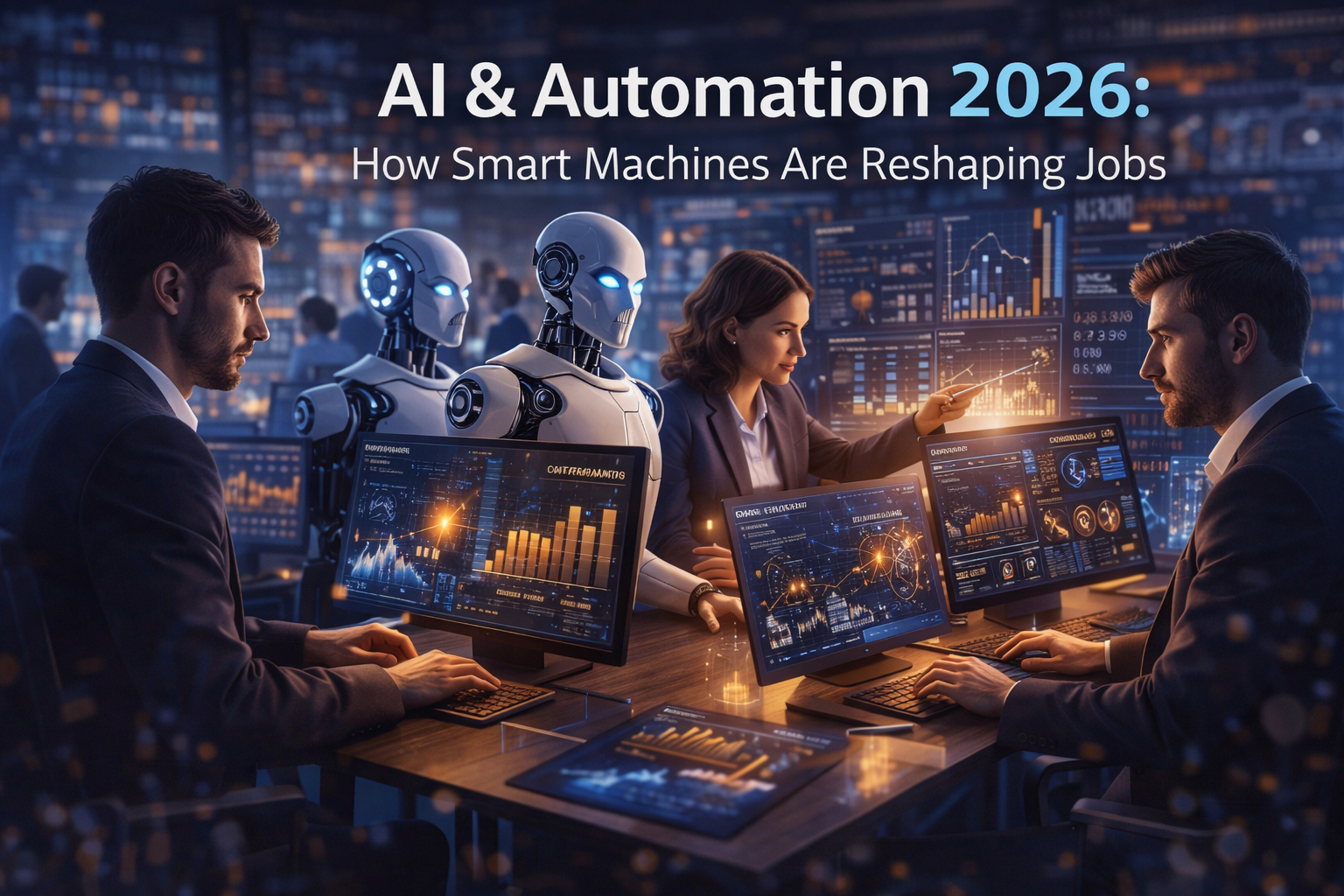
The nature of work has always evolved with technology.
However, the transformation driven by artificial intelligence and automation in 2026 feels fundamentally different. It is faster, more pervasive, and deeply intertwined with how economies function.
Smart machines are no longer confined to manufacturing floors or data centers.
They are becoming partners in decision-making, creativity, and strategic planning.
Understanding how AI and automation are reshaping jobs is essential for professionals, businesses, and policymakers navigating the future of work.
The Shift from Manual Tasks to Intelligent Workflows
Automation historically focused on repetitive physical labor.
Today’s AI systems are capable of analyzing complex data, generating insights, and even supporting creative processes.
This shift has redefined job structures across industries.
Organizations now use AI to:
- Automate routine administrative tasks
- Enhance predictive decision-making
- Optimize customer service interactions
- Accelerate product innovation cycles
- Improve operational efficiency
The result is a workplace where efficiency and adaptability determine long-term success.
Emerging Job Categories in the AI Era
Rather than eliminating employment, automation is creating new professional opportunities.
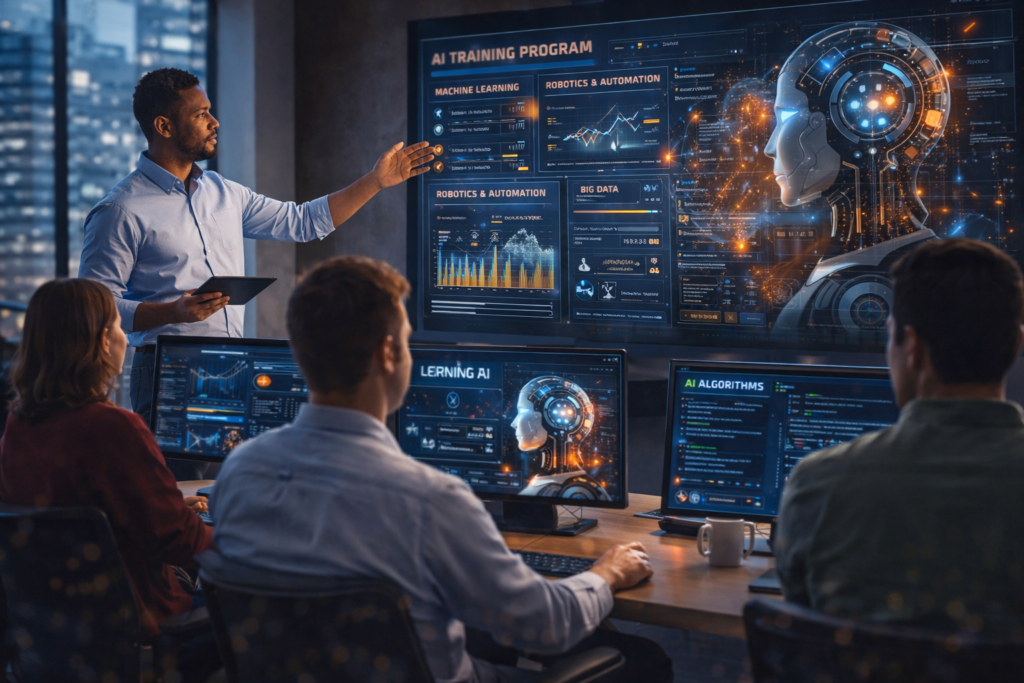
AI Trainers and Supervisors
These roles ensure machine learning systems function accurately and ethically.
Data Strategists and Analysts
As data becomes the core economic resource, professionals skilled in interpreting insights are in high demand.
Automation Integration Specialists
Companies require experts who can implement AI tools seamlessly into existing workflows.
Digital Ethics Consultants
With increased reliance on AI, ethical governance has become a strategic priority.
These emerging roles illustrate how the workforce is evolving rather than shrinking.
Industries Experiencing the Most Transformation
Automation’s impact varies across sectors.
Finance and Investment
AI systems conduct real-time risk analysis, algorithmic trading, and fraud detection.
Healthcare and Biotechnology
Automation assists in diagnostics, medical imaging analysis, and research acceleration.
Marketing and Customer Experience
Predictive algorithms personalize consumer journeys at scale.
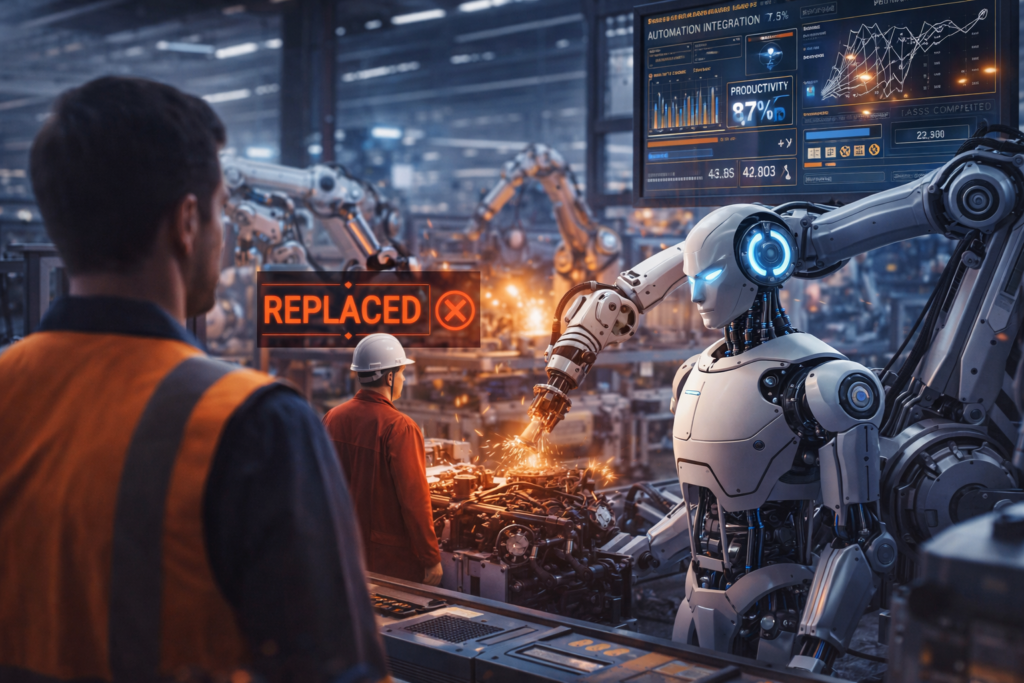
Manufacturing and Logistics
Smart factories and autonomous supply chains enhance productivity.
These transformations demonstrate how automation drives both efficiency and innovation.
Psychological and Cultural Impacts of Automation
The conversation around automation often focuses on economic outcomes.
However, its psychological implications are equally significant.
Professionals are redefining:
- Career identity
- Skill relevance
- Long-term job security perceptions
- Work-life balance expectations
Automation encourages individuals to adopt lifelong learning mindsets.
Adaptability is becoming more valuable than specialization alone.
Economic Implications of the AI-Driven Workforce
Global productivity patterns are shifting as automation adoption increases.
Businesses leveraging AI achieve:
- Faster scalability
- Reduced operational costs
- Enhanced innovation capacity
- Competitive global positioning
These advantages attract investment and accelerate economic transformation.
However, policymakers must balance technological progress with workforce reskilling initiatives to ensure inclusive growth.
Common Misconceptions About AI and Jobs
Several myths continue to shape public perception.
“Automation Will Eliminate Most Jobs”
In reality, automation alters job composition rather than eliminating work entirely.
“Only Technical Professionals Will Thrive”
Soft skills such as leadership, creativity, and emotional intelligence remain crucial.
“AI Benefits Only Large Corporations”
Small businesses increasingly leverage automation tools to compete globally.
Understanding these nuances helps professionals make informed career decisions.
Strategic Skills for the Automation Economy
To thrive in an AI-driven world, professionals should focus on:
- Digital literacy and data interpretation
- Interdisciplinary problem solving
- Ethical decision-making
- Continuous skill development
- Collaboration with intelligent systems
These competencies enable individuals to harness automation rather than resist it.
The Future of Work in 2026 and Beyond
Automation is not a temporary trend.
It represents a structural shift redefining how value is created in modern economies.
As AI systems continue to evolve, the relationship between humans and machines will become increasingly collaborative.
Organizations that integrate automation responsibly while investing in human development will lead the next phase of economic growth.
Understanding this dynamic allows individuals to position themselves strategically in a rapidly changing professional landscape.