

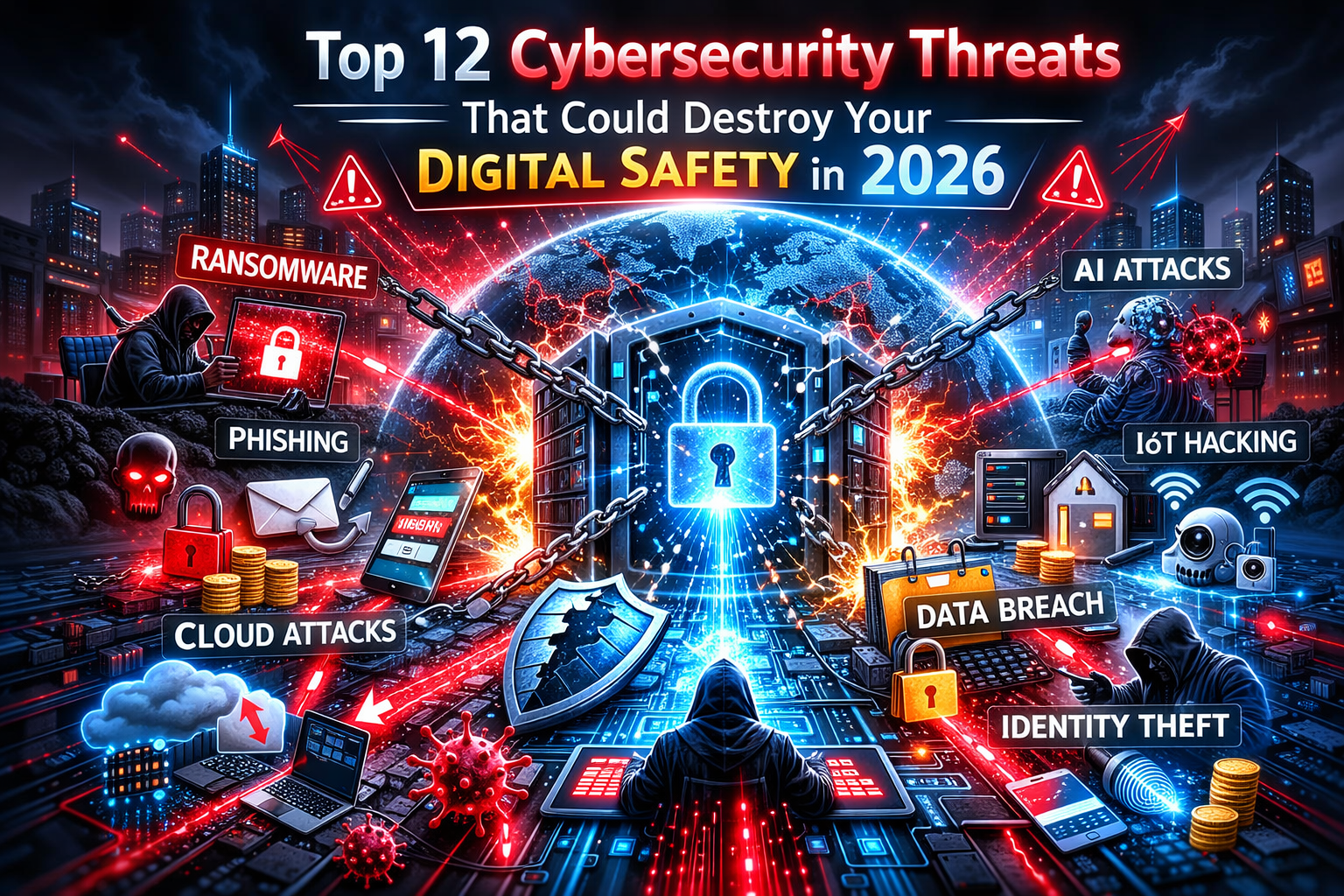
Cybersecurity threats are evolving at an alarming pace as digital technologies continue to reshape the global economy. In 2026, individuals and businesses face increasingly sophisticated cyber risks driven by artificial intelligence, automation, and hyper-connected digital ecosystems. Understanding the most dangerous cybersecurity threats is essential to protect sensitive information, prevent financial loss, and maintain digital trust.
This comprehensive guide explores the top cybersecurity threats in 2026 and provides actionable strategies to strengthen your digital safety in a rapidly changing threat landscape.
1. AI-Driven Phishing Attacks
Artificial intelligence is enabling cybercriminals to create highly convincing phishing emails, voice deepfakes, and automated scam campaigns. These attacks are harder to detect because they mimic real communication patterns.
To mitigate risks, organizations must adopt AI-based email security filters and user awareness training to prevent credential theft.
2. Advanced Ransomware Campaigns
Ransomware attacks are becoming more targeted, focusing on critical infrastructure, healthcare systems, and enterprise networks. Cybercriminals now use double and triple extortion techniques to maximize financial impact.
Regular data backups, endpoint protection, and incident response planning are crucial to minimize ransomware damage.
3. Zero-Day Vulnerability Exploits
Zero-day vulnerabilities allow attackers to exploit software flaws before developers release security patches. These threats can lead to massive data breaches and operational disruptions.
Continuous vulnerability scanning and proactive patch management are essential defenses against zero-day attacks.
4. Supply Chain Cyber Attacks
Cybercriminals are increasingly targeting third-party vendors to gain access to large enterprise networks. Supply chain breaches can compromise thousands of organizations simultaneously.
Implementing vendor risk assessments and multi-layered access controls can help reduce exposure.
5. IoT Device Hijacking
The rapid growth of Internet of Things (IoT) devices is expanding the cyber attack surface. Smart homes, healthcare devices, and industrial systems are vulnerable to exploitation.
Organizations must enforce device authentication, firmware updates, and network segmentation to protect IoT ecosystems.
6. Cloud Misconfiguration Risks
As businesses migrate to cloud environments, misconfigured storage, weak authentication, and insecure APIs create new vulnerabilities.
Adopting cloud security posture management (CSPM) and encryption best practices is critical to secure digital assets.
7. Deepfake-Based Social Engineering
Deepfake technology is being used to impersonate executives and manipulate employees into transferring funds or revealing confidential information.
Enhancing identity verification protocols and digital trust frameworks can mitigate deepfake threats.
8. Insider Threats and Human Error
Employees, contractors, or partners with system access can unintentionally or intentionally compromise cybersecurity. Insider threats remain a major risk factor for organizations worldwide.
Companies must implement behavioral monitoring, role-based access control, and security awareness training.
9. Credential Stuffing and Identity Theft
With massive data leaks occurring globally, attackers use stolen credentials to access personal and enterprise accounts. Identity theft can result in financial fraud and reputational damage.
Implementing multi-factor authentication (MFA) and passwordless security solutions is essential to protect user identities.
10. Mobile Malware Expansion
Mobile devices are becoming primary targets for cybercriminals due to increased reliance on mobile banking and remote work. Malicious apps and spyware pose serious privacy risks.
Mobile security strategies should include secure app ecosystems, endpoint monitoring, and regular software updates.
11. Critical Infrastructure Cyber Warfare
Nation-state cyber operations are targeting energy grids, transportation systems, and financial networks. These attacks can disrupt national security and economic stability.
Governments and enterprises must invest in resilient cybersecurity frameworks and threat intelligence collaboration.
12. Quantum-Era Encryption Challenges
The advancement of quantum computing threatens traditional encryption methods, potentially exposing sensitive data to future cyber attacks.
Preparing for post-quantum cryptography adoption is crucial to ensure long-term data protection.
How to Stay Protected Against Cybersecurity Threats in 2026
To safeguard digital safety, organizations and individuals must adopt a proactive cybersecurity strategy combining technology, policy, and awareness. Investing in AI-powered security tools, implementing zero-trust architecture, and maintaining continuous threat monitoring are key measures to mitigate cyber risks.
Cybersecurity is no longer just an IT responsibility — it is a strategic priority for business resilience and digital transformation. By understanding emerging threats and implementing robust security practices, you can protect your digital future in an increasingly interconnected world.