

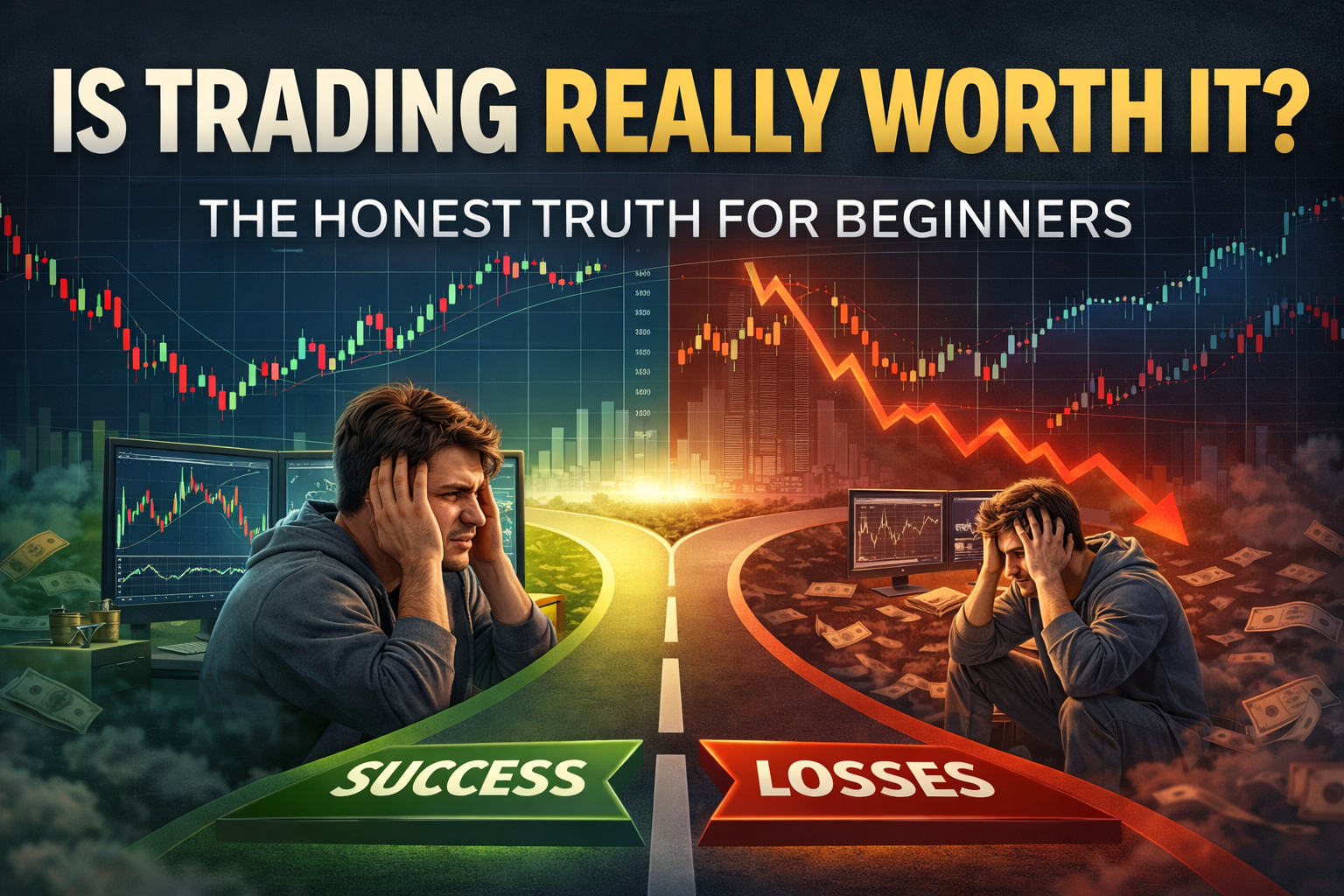
Trading has become one of the most talked-about ways to make money online. Social media is full of screenshots of profits, luxury lifestyles, and promises of quick financial freedom. Many beginners believe trading is a fast path to wealth. But the reality is often very different.
If you are thinking about starting trading in stocks, forex, or cryptocurrency, you need to understand the truth behind the hype. In this article, we will explore whether trading is really worth it, the risks involved, and what beginners should know before entering the market.
What Is Trading?
Trading means buying and selling financial assets in order to make a profit from price changes. These assets can include:
- Stocks
- Cryptocurrencies
- Forex (foreign exchange)
- Commodities
- Indices
Unlike long-term investing, trading usually focuses on short-term price movements. Some traders open and close trades within minutes or hours, while others hold positions for several days.
The main goal of trading is simple: buy low and sell high (or sell high and buy low in short selling).
However, while the concept is simple, successful trading is extremely difficult.
Why Trading Looks So Attractive
Trading attracts millions of beginners every year, and there are several reasons why.
1. The Promise of Quick Money
Many advertisements promote trading as a way to earn money quickly. Some influencers claim they make thousands of dollars daily. This creates the illusion that trading is easy.
2. Low Entry Barrier
With modern trading platforms, anyone can start trading with a small amount of money. Many apps allow you to open an account in minutes.
3. Flexible Lifestyle
Trading can be done from anywhere with a laptop or smartphone. This makes it appealing for people who want financial independence or remote work.
4. Social Media Influence
Platforms like YouTube, TikTok, and Instagram are full of traders showing luxury cars, vacations, and big profits. However, these posts rarely show the losses or struggles behind the scenes.
The Reality: Most Traders Lose Money
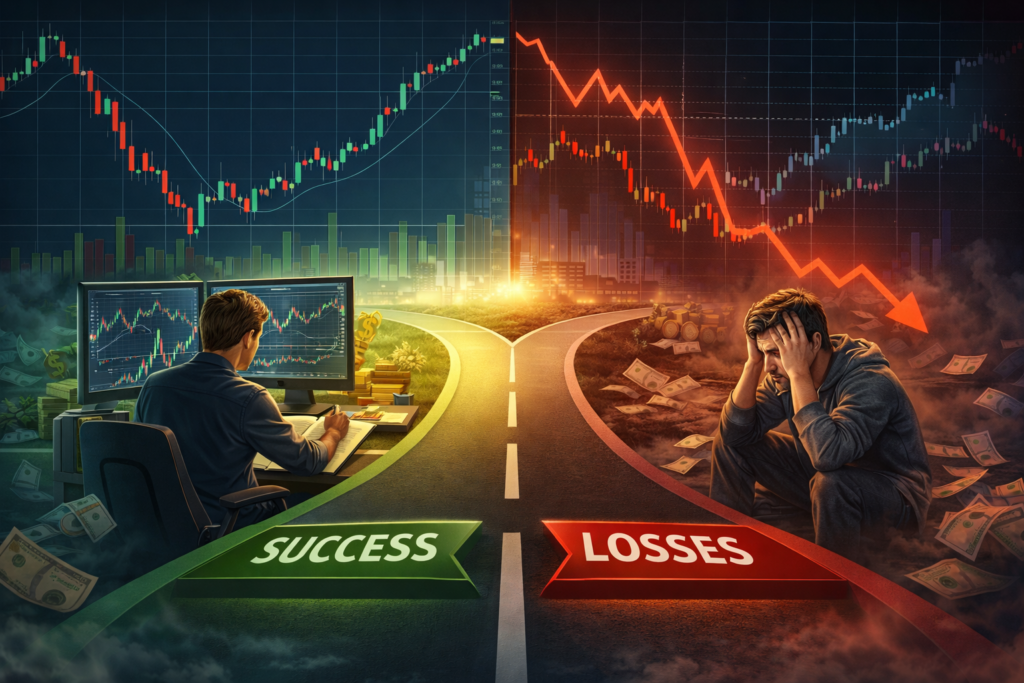
Here is the uncomfortable truth: most traders lose money.
Various studies and broker reports suggest that 70% to 90% of retail traders lose money over time.
There are several reasons for this.
1. Lack of Knowledge
Many beginners start trading without understanding market structure, risk management, or technical analysis. They rely on tips, signals, or random strategies found online.
2. Emotional Trading
Fear and greed are two of the biggest enemies in trading. Beginners often panic during losses or become overconfident after small wins.
3. Poor Risk Management
Professional traders focus heavily on risk management. Beginners often risk too much money on a single trade, which quickly leads to large losses.
4. Unrealistic Expectations
Many people believe trading will make them rich quickly. When profits do not come immediately, they start gambling instead of trading strategically.
How Professional Traders Actually Succeed
While many people lose money, some traders do succeed. But their approach is very different from what most beginners expect.
1. Years of Learning
Professional traders spend years studying markets, strategies, and psychology. Trading is more like a professional skill than a quick side hustle.
2. Strong Risk Management
Successful traders often risk only 1–2% of their capital per trade. This allows them to survive losing streaks.
3. Data-Driven Decisions
Instead of guessing, professional traders rely on tested strategies, historical data, and structured trading plans.
4. Emotional Discipline
Controlling emotions is one of the most important skills in trading. Many professionals treat trading like a business rather than gambling.

Trading vs Investing: Which Is Better?
Many beginners confuse trading with investing.
Trading
- Short-term focus
- High risk
- Requires constant monitoring
- Potentially high stress
Investing
- Long-term focus
- Generally lower risk
- Requires less daily attention
- Often more stable returns
For most people, long-term investing in stocks or index funds is a safer strategy than active trading.
Trading can still be profitable, but it requires much more time, education, and discipline.
Should Beginners Start Trading?
Trading is not necessarily bad, but beginners should approach it with realistic expectations.
Before starting trading, consider these points:
- Learn market fundamentals first
- Start with a demo trading account
- Never trade money you cannot afford to lose
- Focus on risk management
- Avoid “get rich quick” trading courses
Think of trading as a skill that takes years to master, not a shortcut to instant wealth.
The Honest Verdict: Is Trading Worth It?
The answer depends on your expectations and commitment.
Trading can be worth it if you:
- Are willing to spend years learning
- Accept that losses are part of the process
- Treat trading like a professional skill
However, trading is not worth it if you expect:
- Instant profits
- Easy money
- Guaranteed success
For most beginners, starting with long-term investing and financial education is a smarter path.
Final Thoughts
Trading is often marketed as a fast way to achieve financial freedom, but the reality is much more complex. While some traders succeed, many others lose money due to lack of experience, poor discipline, and unrealistic expectations.
If you want to explore trading, start slowly, focus on learning, and manage risk carefully. The financial markets offer opportunities, but only for those who approach them with patience, knowledge, and discipline.
Remember: in trading, survival comes before profit.