

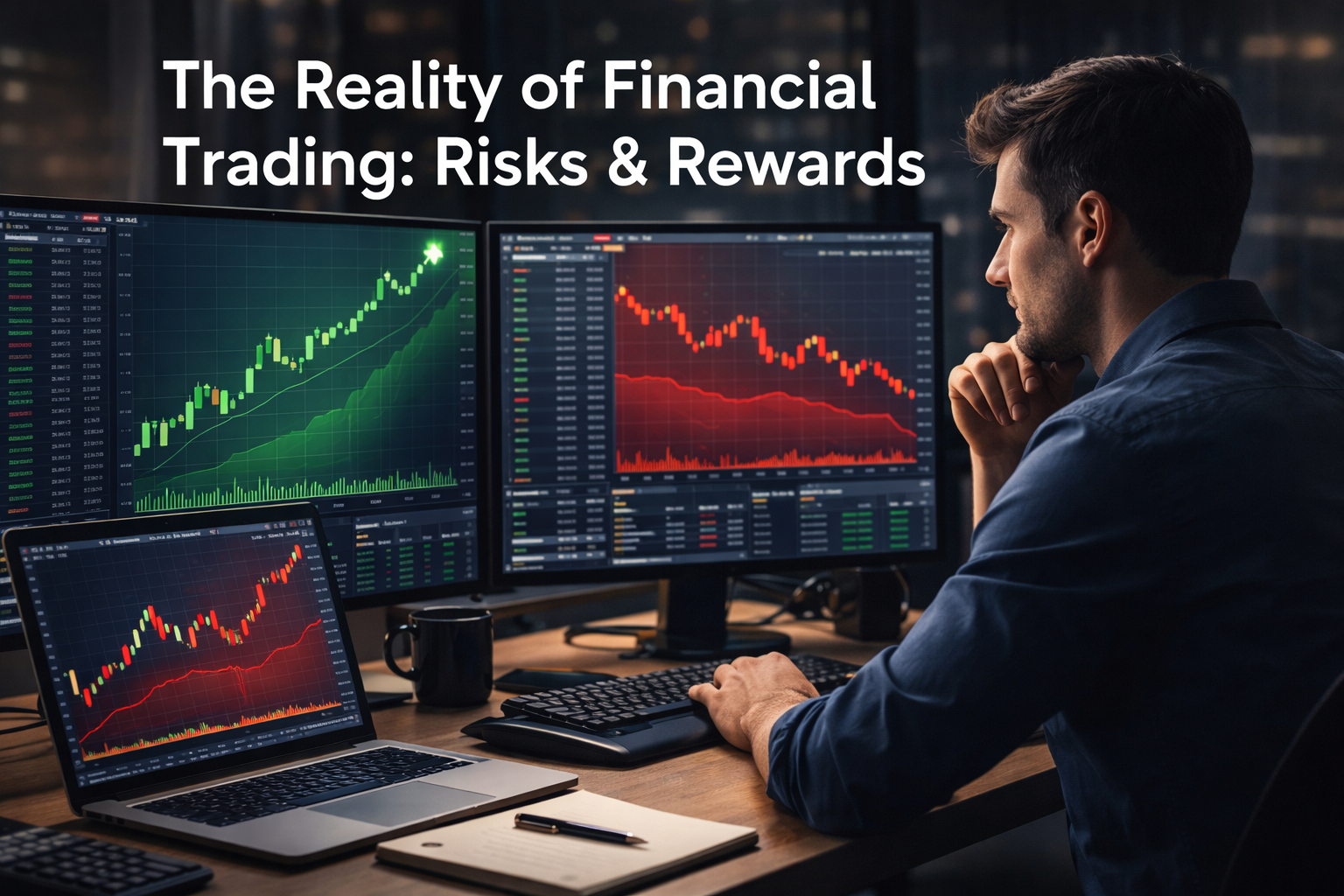
Many people are attracted to trading because of the promise of fast money. Social media is full of screenshots showing massive profits, luxury lifestyles, and claims that trading can replace a traditional job. But the real question is: Is trading actually worth it?
The truth is more complicated than what influencers often show. Trading can be profitable, but it is also risky, stressful, and requires significant skill and discipline. In this article, we will explore the honest truth about trading, who it works for, and whether it is really worth your time and money.
What Is Trading?
Trading refers to buying and selling financial assets with the goal of making a profit from price movements. Traders typically operate in markets such as:
- Stocks
- Forex (foreign exchange)
- Cryptocurrencies
- Commodities
- Options and futures
Unlike long-term investing, trading usually focuses on short-term price changes. Some traders hold assets for minutes or hours (day trading), while others hold them for several days or weeks (swing trading).
The appeal of trading comes from the idea that you can earn money quickly if you correctly predict market movements.
Why Trading Looks So Attractive
Trading has become extremely popular, especially among younger people. Platforms like YouTube, TikTok, and Instagram are full of traders showing profitable trades.
Here are a few reasons why trading looks so appealing:
1. The Dream of Fast Money
Many online traders promote the idea that you can turn a small amount of money into a large fortune quickly. While this is sometimes possible, it is extremely rare.
2. Freedom and Flexibility
Trading can be done from anywhere with a laptop and internet connection. This creates the impression of a location-independent lifestyle.
3. Low Entry Barrier
Thanks to apps like MetaTrader 4 and Robinhood, anyone can start trading with relatively small amounts of money.
But attractive marketing often hides the reality.
The Reality of Trading
Trading is far more difficult than it appears online. Most beginners underestimate the level of skill and discipline required.
Most Traders Lose Money
Multiple studies show that a majority of retail traders lose money. In fact, some brokerage statistics indicate that 70–90% of traders are not profitable in the long run.
Why does this happen?
- Emotional decision-making
- Lack of strategy
- Poor risk management
- Overtrading
- Unrealistic expectations
Many new traders enter the market expecting fast profits but end up losing their capital.
Skills Required to Succeed in Trading
Trading is not gambling when done correctly. Successful traders treat it as a professional skill that requires years of practice.
Here are some important skills traders must develop.
1. Market Knowledge
Understanding how markets behave is essential. Traders often study technical analysis, price action, and market psychology.
2. Risk Management
Good traders focus more on protecting capital than making profits. Even professional traders often risk only 1–2% of their capital per trade.
3. Emotional Discipline
Fear and greed are the biggest enemies of traders. Emotional trading can destroy an account quickly.
4. Patience
Successful traders often wait hours or days for the right opportunity.
Trading is less about constant action and more about waiting for high-probability setups.

Trading vs Long-Term Investing
One important comparison is trading vs long-term investing.
Long-term investing involves buying assets and holding them for years. Legendary investors like Warren Buffett built their wealth using this approach.
Here are some key differences:
| Trading | Long-Term Investing |
|---|---|
| Short-term price movements | Long-term value growth |
| Higher stress | Lower stress |
| Requires constant monitoring | Passive approach |
| Higher risk | Generally lower risk |
For many people, long-term investing is a more reliable wealth-building strategy than trading.
When Trading Can Be Worth It
Despite the risks, trading can be worth it for certain people.
1. If You Treat It Like a Skill
Trading should be approached like learning a profession. It requires education, practice, and continuous improvement.
2. If You Have Strong Discipline
Successful traders strictly follow their strategies and risk management rules.
3. If You Accept Losses
Even professional traders lose many trades. The goal is not to win every trade, but to manage losses and let profits grow.
4. If You Have Patience
Profitable trading often takes years of experience.

Who Should Avoid Trading?
Trading is not suitable for everyone. You may want to avoid trading if:
- You are looking for quick money
- You cannot handle financial losses
- You have a small emergency fund
- You struggle with emotional decision-making
Trading requires mental resilience and financial discipline.
The Honest Verdict: Is Trading Worth It?
The honest truth is that trading is not an easy path to wealth. It is challenging, risky, and requires significant time to master.
For most people, building wealth through consistent investing, saving, and financial planning is a more reliable approach.
However, trading can be worth it if you:
- Treat it like a serious skill
- Invest time in learning
- Manage risk carefully
- Accept losses as part of the process
In the end, trading is not a shortcut. It is a high-skill financial activity that only rewards those who approach it with patience, discipline, and realistic expectations.